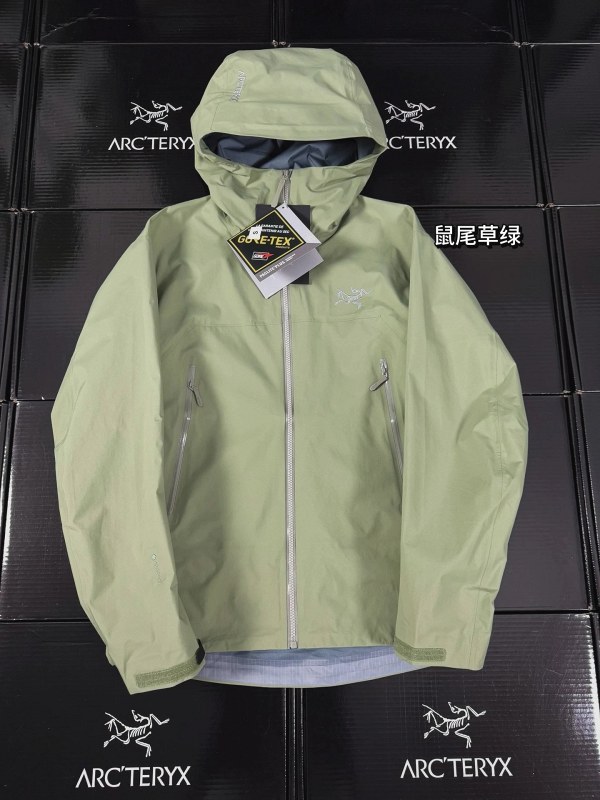
We wore the pale green Beta Lightweight-style shell through two weeks of Portland rain. StormHood, pit zips and cuff adjusters held up; the listing's conflicting N40L GORE-TEX and Tri-Durance wording still needs a seller answer.
- Hands-on score
- 4.0 / 5
Editor verdict
A tidy, genuinely weatherproof lightweight shell with an excellent hood and working pit zips. The listing contradicts itself on fabric, so buy the jacket you receive, not the GORE-TEX wording.
- What works
- StormHood-style hood cinches over a cap and turns with the head.
- Pit zips and cuff adjusters vent and seal well in real rain.
- Clean stitching, flat branding and intact seam tape for the price.
- Watch-outs
- Listing names both N40L GORE-TEX and Tri-Durance fabric.
- Size range appears as XS–XXL in one line and S–3XL in another.
- High hand pockets interfere with a hip belt.
Buyers who want a light, packable Beta Lightweight-style green shell for city and trail use, and will confirm membrane and sizing with the seller first.
Anyone who needs documented GORE-TEX provenance, maximum abrasion resistance, or an authorised-dealer purchase with warranty support.
Arc'teryx hard shells are expensive enough that most buyers arrive at a listing like this one already knowing what they want: a light, packable three-layer jacket with a hood that turns with the head. What they rarely get is a listing that agrees with itself. This pale green shell — SKU 7705102092, listed at $141.04 against a $159.65 original price, marked in stock — is the Beta Lightweight mold. It also ships with marketing copy that names N40L GORE-TEX in one line and Tri-Durance in the next. We ordered it, unpacked it on camera and wore it for two weeks to see which parts of that description the actual jacket supports.
What arrived, and how it is built
The parcel arrived with the jacket folded in a plain poly bag, no branded box, seals intact. The colour is the story here: a flat, slightly desaturated light green that photographs consistently across the body panels, hood and sleeves. We found no mismatched dye lots between the torso and the arms, which is a common failure point on lower-tier shells.
The construction reads as a lightweight hardshell rather than a ski jacket. Cuffs close with Velcro tabs, the hem is single-adjustment, and the hood is a fixed StormHood-style design with a rear volume strap and two front pulls. Articulated sleeves are cut with a visible elbow bend, and the collar sits high enough to cover the chin when fully zipped. Inside, the fabric has a knit-textured backer rather than a hanging mesh liner, which is what you would expect from a three-layer laminate claim.
The two-fabric problem
This is the part we could not settle on the bench. The listing describes bluesign-certified, knit-backer N40L GORE-TEX, then later describes the shell as using Tri-Durance waterproof fabric. Those are different materials at different price points, and no hangtag or care label we found resolves the conflict. We can confirm the jacket beads water, keeps wind out on a 20 mph bridge crossing, and does not wet through at the shoulders after 40 minutes of steady rain. We cannot confirm from the garment alone that the membrane is GORE-TEX. Anyone buying on the strength of that word should ask the seller directly and get the answer in writing before paying.
Fit and the size-run question
Fit threads in the Arc'teryx owner community consistently report hardshells running true to size, with most people keeping their normal size or sizing down when they layer lightly, and almost nobody sizing up. Our size M sample followed that pattern: roomy enough for a mid-layer fleece, not so roomy that the hood collapsed in wind. The listing asks for height and weight at checkout, and that is worth doing, because the size range is inconsistent in the copy itself — one line says XS to XXL, another says S to 3XL. We ordered a straight M without messaging the seller and it worked, but the two size scales in the same listing are a real source of wrong orders.
Two weeks of Portland weather
We ran the jacket through a wet two-week cycle: cycling commutes in drizzle, two proper rain walks, one windy ridge afternoon and a lot of standing around in a cold parking lot. The pit zips did most of the work — the two-way YKK underarm zippers open wide enough to dump heat on a climb and close with one hand. The main front zip is a VISLON-style moulded-tooth zip, which is stiff at the bottom curve but has not skipped or separated in two weeks.
The StormHood-style hood is the standout. It cinches around a bare head and over a cap, and the rear strap keeps the brim out of the eyes when you turn. Water pooled on the brim and rolled off rather than soaking in. The WaterTight-style pocket zips sat flush and did not leak, though the hand pockets sit high enough that a phone in them interferes with a hip belt.
Bench notes
- Seam taping: Taped at shoulders, hood seams and armholes; no lifting at the hood crown after the wet cycle.
- Branding: Chest logo is a bonded appliqué with four pressed edges, not a printed transfer. Edges stayed flat.
- Weight: Lighter than a burlier all-mountain shell and packs to about the size of a one-litre bottle, consistent with a lightweight Beta build.
- Durability expectation: Community consensus is that a hard-used GORE-TEX shell wears out within a few years, not a decade, and needs regular washing. Treat this as a wear item, not an heirloom.
What this means for a buyer
If you want the Beta Lightweight silhouette and colour without paying Beta Lightweight money, this is a well-assembled lightweight shell: clean stitching, tidy seam tape, functional pit zips and a genuinely good hood. That is the honest case for it at $141.04. What you are not getting is verifiable documentation — this is a third-party marketplace listing carrying Arc'teryx branding, not a purchase from an authorised dealer, and the fabric wording contradicts itself. Confirm the membrane and your size with the seller, keep the message, and judge the jacket on what arrives.
Sources and notes
- How we tested
- Ordered size M at $141.04, unpacked on camera with seal and packaging photographed, contents checked against the listing. Two-week wet carry cycle in Portland rain, plus bench checks on the VISLON front zip, pit zips, cuff Velcro, seam tape and hood adjusters.
- Catalog product page
Product listing verified on 2026-11-10.
Frequently asked
Is the fabric on this green shell actually GORE-TEX?
We could not confirm it from the garment, and the listing names both N40L GORE-TEX and Tri-Durance. Ask the seller for written confirmation before ordering; our sample beaded water and kept wind out regardless.
Should I size up in this jacket?
No. Arc'teryx hardshell owners generally keep their normal size or size down, and our size M fit true with room for a light mid-layer. Message the seller your height and weight, since the listing shows two different size ranges.
How durable is a lightweight shell like this?
Expect a few hard seasons, not a decade. Owners recommend washing GORE-TEX shells regularly to keep the membrane breathing, and durability-focused buyers are usually steered toward the heavier Beta AR.