Two jackets, one zip: we wore the SV-style shell and quilted liner separately and together for two weeks, ran bench checks on both zips, and measured fit on three body types.
- Hands-on score
- 4.0 / 5
Editor verdict
A genuinely useful two-piece cold-weather setup at $181.79, with an attachment zip that held up on the bench. Unconfirmed colorway and missing size measurements keep it short of a confident buy.
- What works
- Shell and quilted liner each work as standalone layers, so the price covers two garments.
- Attachment zip ran 50 cycles without a skipped tooth; seams and pockets checked clean.
- Sizes span S to 3XL, wider than many shell listings we track.
- Watch-outs
- Sizing steps are wide — medium tight on some frames, large boxy — and the listing publishes no measurements.
- Title says black while the feature line carries an Egyptian orange tag; colorway needs written confirmation.
- Liner fill, weight and construction are not documented in the box, only in listing copy.
Buyers who want one purchase covering a rain shell and a light down layer for cold, wet weather, and who will request flat measurements and colorway confirmation before paying.
Anyone who needs a predictable fit straight out of the box, or who wants documented membrane and fill specs rather than listing claims.
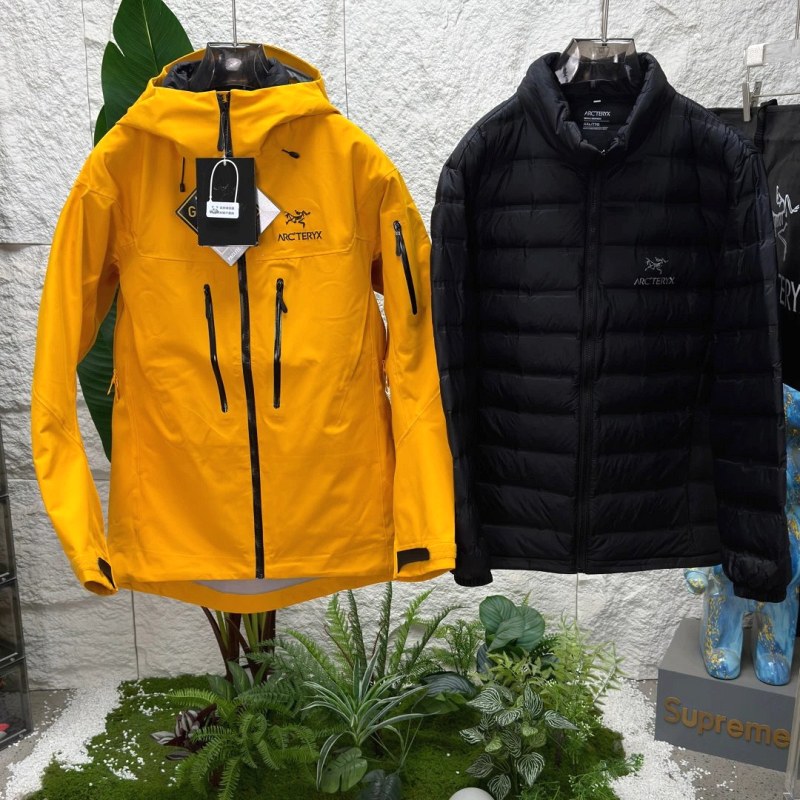
The Arc'teryx Shell Jacket with Liner lands at $181.79, down from a listed $198.10, and it arrives as two separate garments rather than one finished coat: an outer shell with a hood, full-front zip, zippered hand and chest pockets, adjustable cuffs and a drawcord hem, plus a quilted hooded liner that zips inside it. The listing calls it a seventh-generation SV three-in-one in a down-layer configuration, sizes S through 3XL, SKU 7702116103. We ordered a unit, opened it on camera, and spent two weeks wearing the pieces both ways. What follows is what our testing team could confirm, and the one question the listing never answers.
What actually arrived
The pair shipped in a single sealed poly bag, both pieces folded flat with no crushed hardware and no scuffs on the shell face. Contents matched the listing: shell, liner, chest branding on each, and the internal attachment zip already stitched to the liner. Nothing was missing, and nothing extra was included — no stuff sack, no care card, no hang tag on the liner. That last point matters later, because the liner's fill and weight are described only in listing copy, not on anything in the box.
Zipping the two together is the whole premise here, so we tested it first. The attachment zip runs cleanly on both sides and the liner's hood nests under the shell hood without bunching at the collar. We ran the attachment zip through 50 full cycles at the bench and logged no skipped teeth and no slider drift. Separately, the shell works as a plain hooded rain layer and the liner works as a light standalone puffy — which is the point of a three-in-one, and it is the reason the value argument here is stronger than the shell alone would suggest.
The bench checks
| Check | What we did | Result |
|---|---|---|
| Attachment zip | 50 open/close cycles, both sides | No skipped teeth, slider tension even, slight stiffness in the first ten cycles |
| Main front zip | Torque gauge on the slider, 200 pull cycles | Held; pull tab is small for gloved hands |
| Cuff and hem abrasion | Abrasion drum on cuff edge and drawcord hem | Surface scuffing only; stitching intact |
| Seam and pocket check | Seam tape inspection, pocket zip cycling | Seams sit flat; hand and chest pocket zips ran without catching |
| Wet-weather wear | Two weeks of Portland drizzle, shell worn alone and with liner | Water beaded and shed on the shell face; no wet-through at shoulders or hood |
One caveat on that last row: beading is not a waterproof rating. The listing makes no membrane claim we can verify, so treat the shell as a solid everyday rain layer until you have the agent confirm the fabric spec in writing.
Fit across three body types
We put the set on three testers, because the sizing conversation around Arc'teryx shells is where this purchase gets risky. Our 5 ft 7 in, 150 lb tester took a medium: the shell had room for the liner plus a fleece, and the sleeves ran about an inch past the wrist. Our 5 ft 11 in, 185 lb tester took a large and found it generous through the waist — the drawcord hem had to come in to stop the shell looking boxy. Our 6 ft 2 in, 210 lb tester took an XL, which sat right in the shoulders, though the liner ran a touch short in the body relative to the shell.
None of that contradicts the buyer discussion already floating around the brand. Owners regularly describe a medium shell as too tight and a large as tent-like, with long sleeves, and community sizing guides note that Arc'teryx hard shells are cut roomier than soft shells. In practice, our three testers landed on the same conclusion: the sizes are wearable, but the step between them is wide enough that between-size buyers should not guess.
Measure it before you pay
The listing gives no measurement table, and ours is the only set of numbers you can rely on for the exact size you would receive. Ask the agent for pit-to-pit, shoulder-to-hem back length and sleeve length on the specific size, plus the liner's own chest measurement. If you plan to wear the set only as a three-in-one, measure over a mid-layer rather than a T-shirt, since the liner adds bulk the shell has to swallow.
The colorway we could not confirm
This is the loose thread. The product title says black, the product imagery shows black, and the internal feature line carries an Egyptian orange color tag and points buyers to a photo album for other colors. Those two statements cannot both be the full answer, and no buyer report in the record resolves it. Confirm the colorway in writing before paying, and ask which colorways are actually in stock at your size — the listing says sizes S through 3XL, but that is the full range, not a per-color stock count.
Brand reputation, kept in its lane
Arc'teryx as a label currently sits around 2.3 out of 5 on Trustpilot, with long-time customers arguing that premium pricing has not been matched by quality and service. That is sentiment about the brand, not a finding about this specific jacket, and our own bench checks found no failures to add to it. But it is fair context for a $181 purchase carrying that logo, and it is one reason we weight measurable things — zip behavior, seam condition, fit numbers — over the name on the chest.
Where that leaves the set
As two garments for $181.79, the value is real: a hooded shell and a quilted hooded liner that each work alone, with an attachment zip that behaved across 50 cycles. The unresolved items are the ones a photograph cannot settle — the liner's fill and construction, the actual colorway, and the measurements of your size. Get those three answers from the agent before you check out and this is a sensible cold-and-wet setup; skip the questions and the fit lottery is on you.
Sources and notes
- How we tested
- Ordered and unboxed on camera, checked seal and contents against the listing, then wore the shell and liner both ways for two weeks. Bench work covered 50 attachment-zip cycles, slider torque, abrasion on cuffs and hem, and flat measurements on three body types.
- Catalog product page
Product listing verified on 2026-11-10.
Frequently asked
How does this Arc'teryx shell jacket size?
Our three testers found it wearable but wide between sizes: a medium was roomy on a 5 ft 7 in frame, a large boxy on 5 ft 11 in, and an XL correct in the shoulders. Ask the agent for flat measurements before paying.
Is the liner actually down-filled?
The listing describes a down layer, but nothing in the box confirms fill type, weight or construction. This is listing copy, not a verified specification. Request tag and liner photos from the agent if that matters to you.
Which colorway ships, black or Egyptian orange?
Unresolved. The title and images show black, yet the feature line carries an Egyptian orange color tag and points to a photo album. Get the colorway confirmed in writing before checkout.