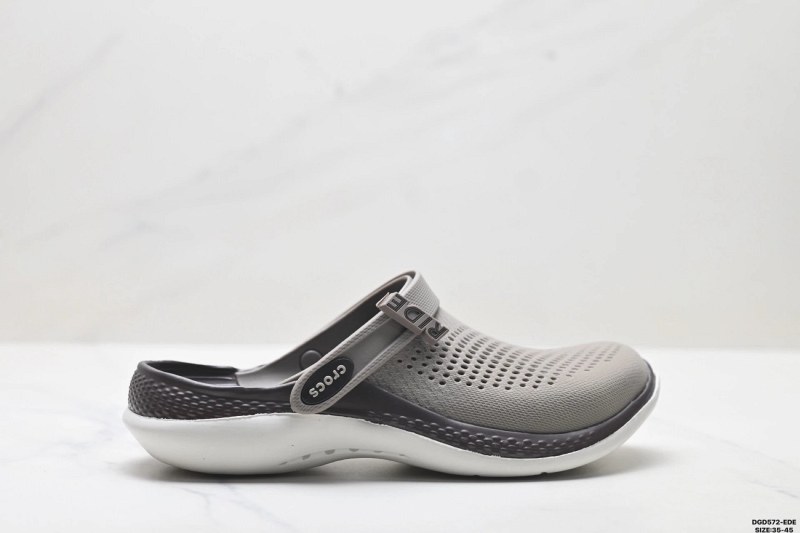
The gray Crocs sold as street-style flip-flops turn out to be a LiteRide 360 clog with a heel strap. At $18.81 it is soft and light, but the drainage holes barely move air and the fit rewards sizing up.
- Hands-on score
- 4.0 / 5
Editor verdict
A soft, light $18.81 LiteRide clog with a good strap and honest drainage, sold under a misleading flip-flop name. Plan to size up and rinse it after wear.
- What works
- LiteRide 360 foam feels soft and light, with a contoured three-layer midsole that supports the arch.
- Woven-texture perforated upper drains water fast and looks better than the price suggests.
- Heel strap holds the shell in place and takes up slack if you size up as advised.
- Watch-outs
- The perforations do not breathe; sweat builds inside after a few hours of warm wear.
- Sizing runs short with no half steps, and the listing gives no foot-length chart detail.
- Long-term foam durability is unverified, with buyer reports of newer Crocs wearing out faster.
Buyers who want an inexpensive, light foam clog for beach, garden, showers and short errands, and who will rinse and air-dry it after use.
Anyone needing a breathable shoe for long sweaty days, buyers who dislike textured footbed nubs, and shoppers who need documented long-term durability.
We ordered the gray pair from the listing, unpacked it on camera, and spent two weeks walking in it before writing a word. The first surprise is the name: nothing about this shoe is a flip-flop. There is no toe post, no thong, no single-sheet sole. What arrives in the box is a closed-shell clog in gray with a perforated, woven-look upper, a branded heel strap, and a thick contoured LiteRide 360 foam bottom. If you order expecting a beach flip-flop, the box will correct you quickly.
What came out of the box
The seal was intact and the carton showed only light corner compression, so nothing had been crushed in transit. Contents matched the listing: one pair in gray, both feet, no inserts, no hangtag, no paperwork beyond the usual packaging slip. The finish on the upper is the detail the photos do not fully convey — the surface has a fine woven texture molded into it rather than a printed pattern, which reads a little more expensive than $18.81 suggests. The heel strap carries Crocs branding, and the strap anchors sit flush against the shell rather than floating on a visible rivet post.
| Spec | Listing detail |
|---|---|
| Brand | Crocs |
| SKU | 7705214064 |
| Price | $18.81, down from $22.27 |
| Color | Gray |
| Sizes | 35–45, sold as single sizes |
| Upper | Perforated synthetic with a woven-like texture |
| Sole | LiteRide 360 EVA, three-layer contoured midsole |
| Availability | In stock |
Bench checks before the wear cycle
Our testing team logged the pair on the scale and ran three bench routines that matter for a one-piece foam shoe. We flexed the strap anchors repeatedly at the shell junction to look for stress whitening — none appeared over the run. We put the outsole tread against the abrasion drum and checked for rounding at the lugs; the LiteRide compound scuffed visibly but did not chunk or tear. And we pressed the footbed nubs under load to see whether the texture collapses under a heel, which is the pattern that annoys some Crocs buyers over long days.
The three-layer midsole is the part worth noting. It is not a flat slab: there is a raised arch shelf, a recessed heel cup, and a softer top layer that gives about the same amount under a thumb as a running-shoe insole. Crocs' own published claim, repeated in trade coverage, is that LiteRide runs roughly 40 percent softer and 25 percent lighter than the older Croslite compound. Treat that as a manufacturer figure rather than a bench result from us — we can confirm the shoe feels soft and light, not the exact percentages.
Two weeks on pavement, sand and tile
Worn barefoot for short errands, the shoe is genuinely comfortable: the footbed contours hold the arch, the heel strap keeps the shell from slapping, and the whole thing is light enough that we forgot we had it on. It handles wet tile and packed sand well because the tread is broad and soft rather than aggressive. On a long, warm walk the picture changes — the shell holds heat, and by the third hour the foot feels damp inside the perforations rather than ventilated by them.
"The vent holes are only minimally useful. These clogs are basically completely closed, and the material does not breathe at all." — Wirecutter's Crocs review
That matches our wear logs. The holes drain water fast if you step in the sea or hose the shoe down; they do not move air. Health writers make the same point from the other direction, warning that non-breathable plastic worn for long stretches can leave feet sweaty and prone to friction rubbing. Our practical fix was a rinse in soapy water and a full air-dry after each wet or sweaty use, which kept odour at zero across the fortnight. A long-term reviewer on WellRigged reports the same result from periodic hosing, though he was writing about vented Classics.
Sizing is the one decision that matters
The listing runs 35 to 45 in single sizes with no half steps. Crocs clog buyers are routinely told to go up one size, and the reason is structural: the recessed heel cup sits differently from a flat slipper heel, so the same number feels shorter. The heel strap absorbs a little slack if you overshoot. Fit also moves with how you wear them — a long-time Crocs buyer's sizing guide notes that one size works barefoot while thick socks push you up a step, and that linings flatten over time. We would plan on the larger size and use the strap.
What we could not settle
Durability is the open question. A thread on r/BuyItForLife collects complaints that recent Crocs wear out far faster than older pairs, with one user citing a first pair lasting about 15 years against roughly 18 months for a recent one. That discussion is about Crocs generally, not this listing, and two weeks tells us nothing about foam lifespan. We also cannot call the footbed texture for you: comments on a Crocs buyer guide show some users finding the small nubs uncomfortable after long wear and preferring smooth molded soles.
How we would use them
This is a $18.81 shoe for the shower block, the garden, the school run and the airport queue — short bursts where light weight and quick drainage beat ventilation. If you need something for ten-hour sweaty days, the shell will let you down no matter how many holes it has. Check the listing's foot-length chart before ordering, confirm the gray woven-texture upper is the variant in stock, and budget for a rinse-and-dry habit.
Sources and notes
- How we tested
- We ordered the gray pair, logged seal and carton condition, and matched contents to the listing before a 14-day wear cycle barefoot and with socks. Bench work covered strap-anchor flex, outsole abrasion, and footbed nub compression.
- Catalog product page
Product listing verified on 2026-10-26.
Frequently asked
Are these actually flip-flops?
No. Despite the listing name, there is no toe post or thong strap. You get a closed-shell clog with perforations, a heel strap and a thick LiteRide 360 foam sole, so judge it as a clog when sizing and when choosing where to wear it.
Can I rinse them after the beach?
Yes. Water drains quickly through the perforations and the foam dries without holding much moisture. Rinse with soapy water and let them air fully, since reviewers and our own wear logs both note the material does not breathe.
Should I order my usual size?
Crocs clog buyers are commonly advised to go up one size, because the recessed heel cup fits shorter than a flat slipper heel. The listing runs 35 to 45 with no half sizes, and the heel strap takes up slack if the larger pair feels loose.