This flat lay centers on black, gray, and white, creating a distinctly winter-ready look through knitwear, outerwear, vests, and sock packaging. The styling focus is not the number of colors, but the balance of light and dark tones, visual contrast between materials, and the negative space arranged between pieces. ## 1. Start by Establishing the Black, Gray, and White Balance Black c
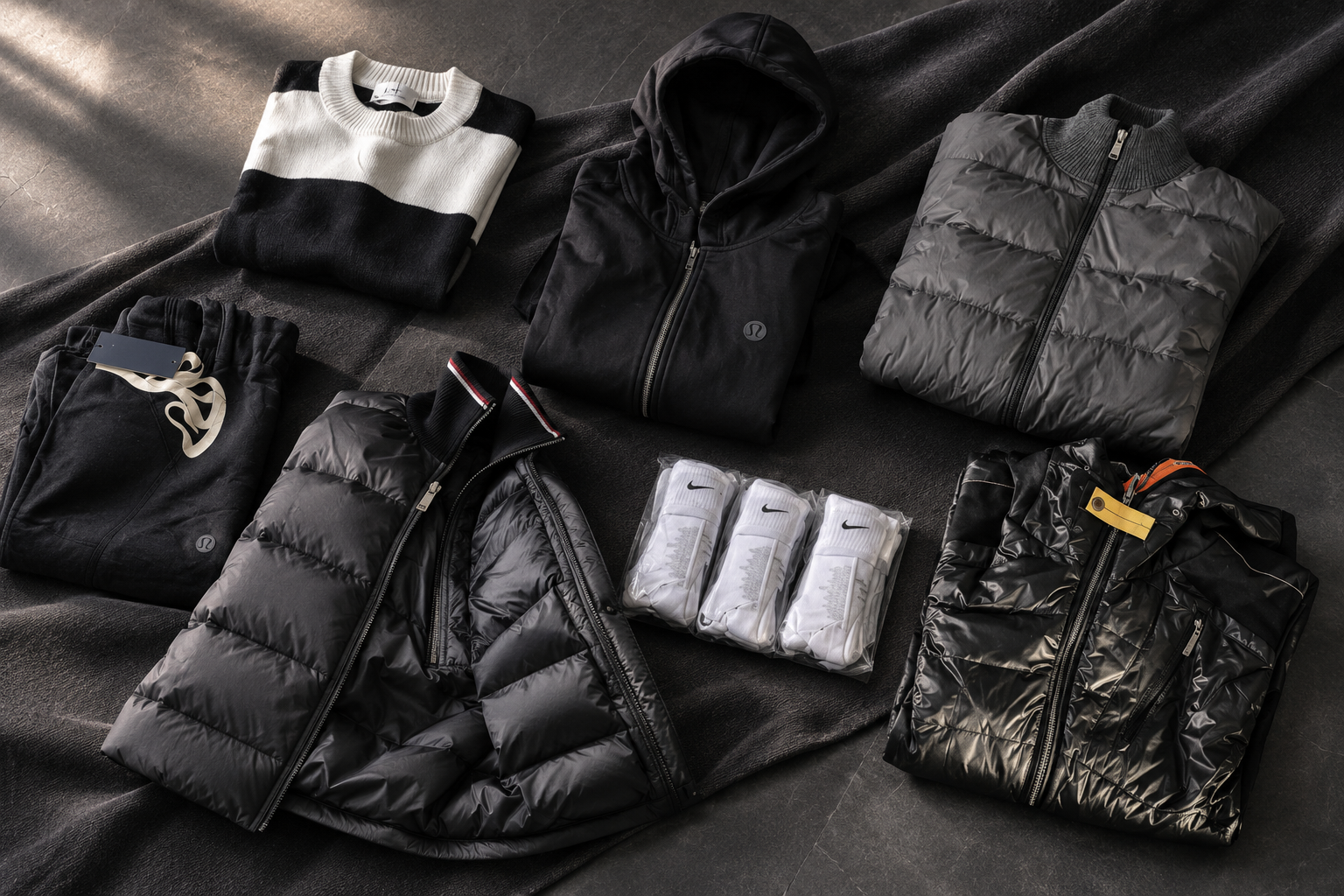
This flat lay centers on black, gray, and white, creating a distinctly winter-ready look through knitwear, outerwear, vests, and sock packaging. The styling focus is not the number of colors, but the balance of light and dark tones, visual contrast between materials, and the negative space arranged between pieces.

1. Start by Establishing the Black, Gray, and White Balance
Black clothing carries most of the visual weight in the layout, while the gray puffer pieces create a transition. The white horizontal-stripe sweater and light-colored sock packaging add highlights. This color scheme works well for anyone looking to build a composed, streamlined winter wardrobe.
You can arrange the proportions as follows:
- Use black as the base color for hooded outerwear, puffer jackets, or trousers to keep the overall look grounded.
- Use medium gray or dark gray as a transition color on larger pieces such as vests and puffer jackets, preventing the full arrangement from feeling too heavy.
- Use white only as a localized highlight, such as on sweater stripes, socks, or the edge of a base layer, giving the dark combination more dimension.
For a sharper look, pair a black outer layer with a gray middle layer, then reveal a small amount of white at the neckline or hem. For a softer visual effect, increase the amount of gray and reduce the concentration of solid black pieces.
2. Use Garment Structure to Build Outfit Dimension
The layout shows several distinct structures: the sweater features horizontal color blocking and a ribbed neckline, the hooded jacket emphasizes its hood shape and front zipper, and the puffer pieces create volume through horizontal quilting and a lofty silhouette. When styling the outfit, organize the layers in the order of base layer, insulating layer, and outer layer.
- Base layer: Choose a simple black-and-white sweater and use horizontal stripes to break up the flatness of a solid color.
- Insulating layer: A gray-and-black puffer vest works well over a sweater or hooded jacket, while preserving the layered detail of the neckline, hood, or cuffs.
- Outer layer: A dark jacket with a zipper, stand collar, or hood can define the main silhouette and make the outfit look more complete.
When layering, avoid placing every bulky piece on the outside at once. If you have already chosen a noticeably voluminous puffer vest, keep the base layer simple. If the outer layer is a lighter hooded jacket, add vertical dimension with a sweater or vest.
3. Choose Piece Combinations Around the Visual Focus
For a more athletic combination, style a black hooded jacket, black trousers, and white socks together, then add a gray puffer vest for contrast. Details such as the hood, zipper, and pockets give the outfit a more functional feel.
For a cleaner urban casual look, make the black-and-white horizontal-stripe sweater the visual center and pair it with dark gray puffer outerwear. The horizontal stripes provide pattern variation, while the solid outer layer keeps the overall proportions grounded.
For a stronger winter mood, combine a black puffer jacket, gray vest, and dark bottoms, allowing a small portion of the white socks or sweater to show. This keeps the look understated without letting the entire outfit collapse into a single block of dark color.
4. How to Make Outfit Relationships Easier to See in a Flat Lay
The strength of this layout is its concentrated selection of categories and unified color palette, making it useful for comparing the silhouettes of different outer layers. When arranging the pieces, place the largest item in the visual center or lower area, and position the sweater and socks at the side as small-scale highlights.
Arrange the pieces in the following order:
- Place larger pieces such as puffer jackets or other jackets first to establish the main outline of the composition.
- Add medium-volume pieces such as hooded outerwear and vests to create variation from front to back or from side to side.
- Place smaller items such as sweaters and socks last, using light colors or stripe details to balance the dark areas.
- Keep zippers, pockets, necklines, and quilting lines visible so the garments do not cover one another.
- Leave suitable spacing between similar colors so the difference between black and dark gray is easier to see.
Overall, a black, gray, and white palette creates variation through proportion and layering. Black establishes the foundation, gray connects the different pieces, and white adds brightness. When making actual selections, first decide on the visual focus, then choose one piece from the sweater, puffer vest, or hooded outerwear as the centerpiece and adjust the remaining items around its color and volume.