This set of images centers on black rectangular frames as the visual focus, creating a warm-cool contrast through a dark tabletop, light green fabric, and off-white clothing. For styling, borrow this low-saturation, minimal-color combination to make the frames' glossy outline and silver connection details the focal point. ## Color Relationships in the Image 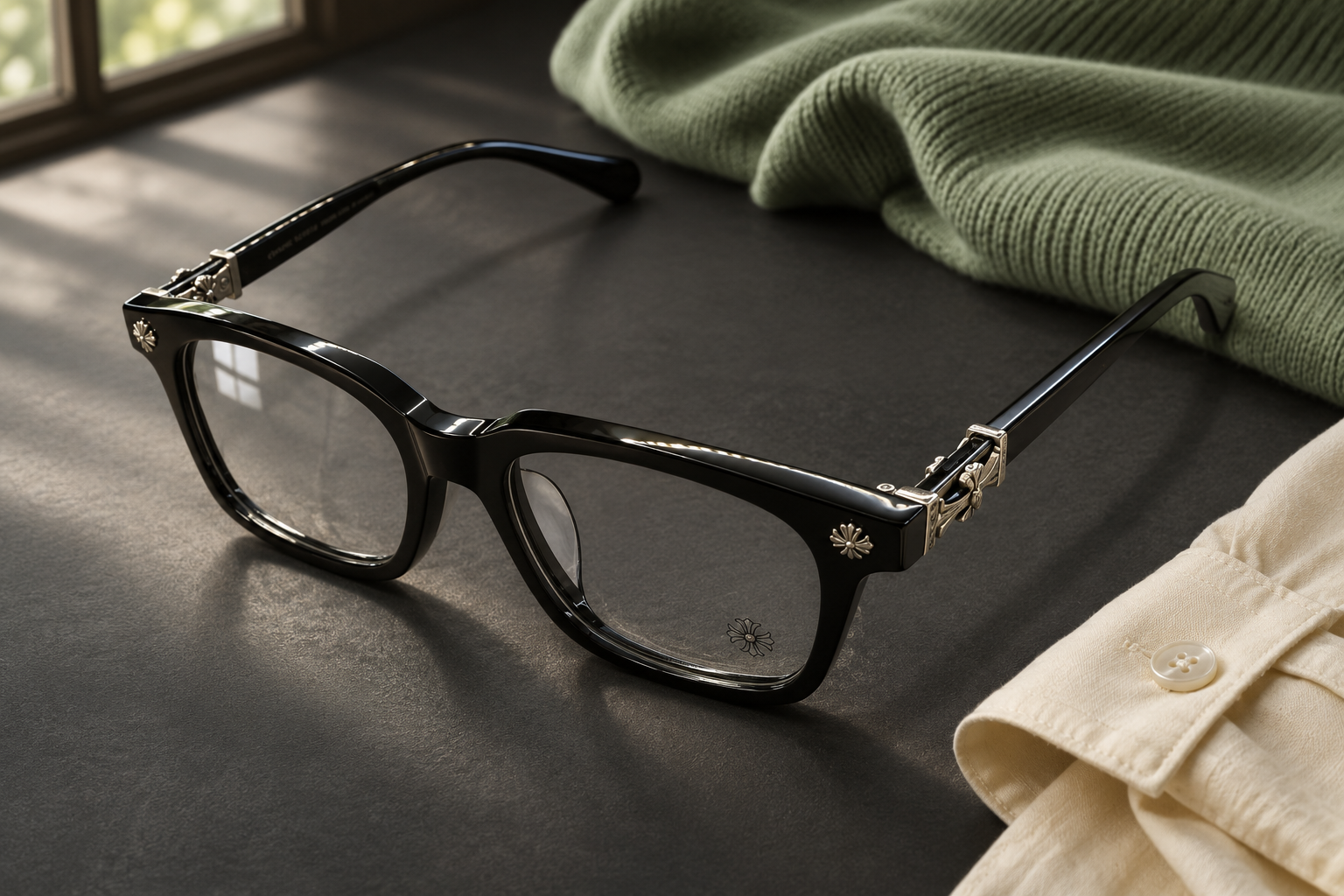
This set of images centers on black rectangular frames as the visual focus, creating a warm-cool contrast through a dark tabletop, light green fabric, and off-white clothing. For styling, borrow this low-saturation, minimal-color combination to make the frames' glossy outline and silver connection details the focal point.
Color Relationships in the Image

Black frames sit well on dark gray, charcoal black, or dark brown backgrounds. A dark base lowers the ambient brightness, making the reflective edges of the frames clearer and the rectangular outline sharper.
Light green fabric adds a soft cool-toned layer to the image. Opt for sage green, olive green, or misty green with a pronounced gray undertone, avoiding overly vivid greens that might steal visual attention from the frames.
Off-white clothing can be placed at the edge of the frame to serve as a brightening element. Ivory white, cream white, and light khaki all contrast clearly with black while being softer than pure white, suitable for vintage or everyday styling displays.
How to Arrange Display Layers
Arrange with the main subject centered and slightly forward, soft materials behind, and light-colored clothing to the side:
Place the glasses in the foreground or slightly below center, keeping the lenses and temples fully visible.
Position the light green knit fabric behind or above, using natural folds to add depth without covering the temple hinges.
Place the off-white clothing in the lower right or lower left corner, retaining details like cuffs, buttons, or folded edges as a light-colored anchor in the composition.
Use a matte dark surface for the background to minimize complex textures and avoid blending with the frames' reflections.
Keep accessories minimal, allowing the silver accents on the frames and the small flower-like pattern beneath the lenses to be recognizable local points of interest.
Clothing Styling Suggestions
For everyday vintage styling, pair a black or dark gray top with a light green knit cardigan, then brighten with off-white trousers or a shirt. This combination matches the color sequence in the image, appearing steady yet not dull.
For a more minimalist look, choose an off-white shirt, dark straight-leg trousers, and black shoes, using light green as a scarf, knit layer, or small-area accent. The frames' glossy finish adds a touch of refinement to solid-colored outfits.
For a casual approach, pair a dark crew-neck top with a light green jacket, keeping clothing lines simple and avoiding large-scale patterns simultaneously. If the clothing already features prominent prints, minimize other accessories to avoid diminishing the recognition of the frames' localized details.
Details to Note When Selecting and Shooting
When observing such styling, pay attention to how the frames' silhouette changes under different lighting, the layered decoration at the temple hinges, and whether the small pattern beneath the lenses is clearly visible. To replicate a similar display, prioritize controlling background brightness, fabric tones, and the position of light-colored clothing, then fine-tune the frame angle so both the front rim line and the side decoration are captured in the frame.