Overall Color Palette This flat-lay features black, navy, pink, royal blue, and olive green as the main colors, combining low-saturation dark bases with visual highlights from pink and royal blue. The tops are arranged on a wooden table against a light fabric background, and the warm setting makes dark garments appear more grounded while making the pink pieces stand out. 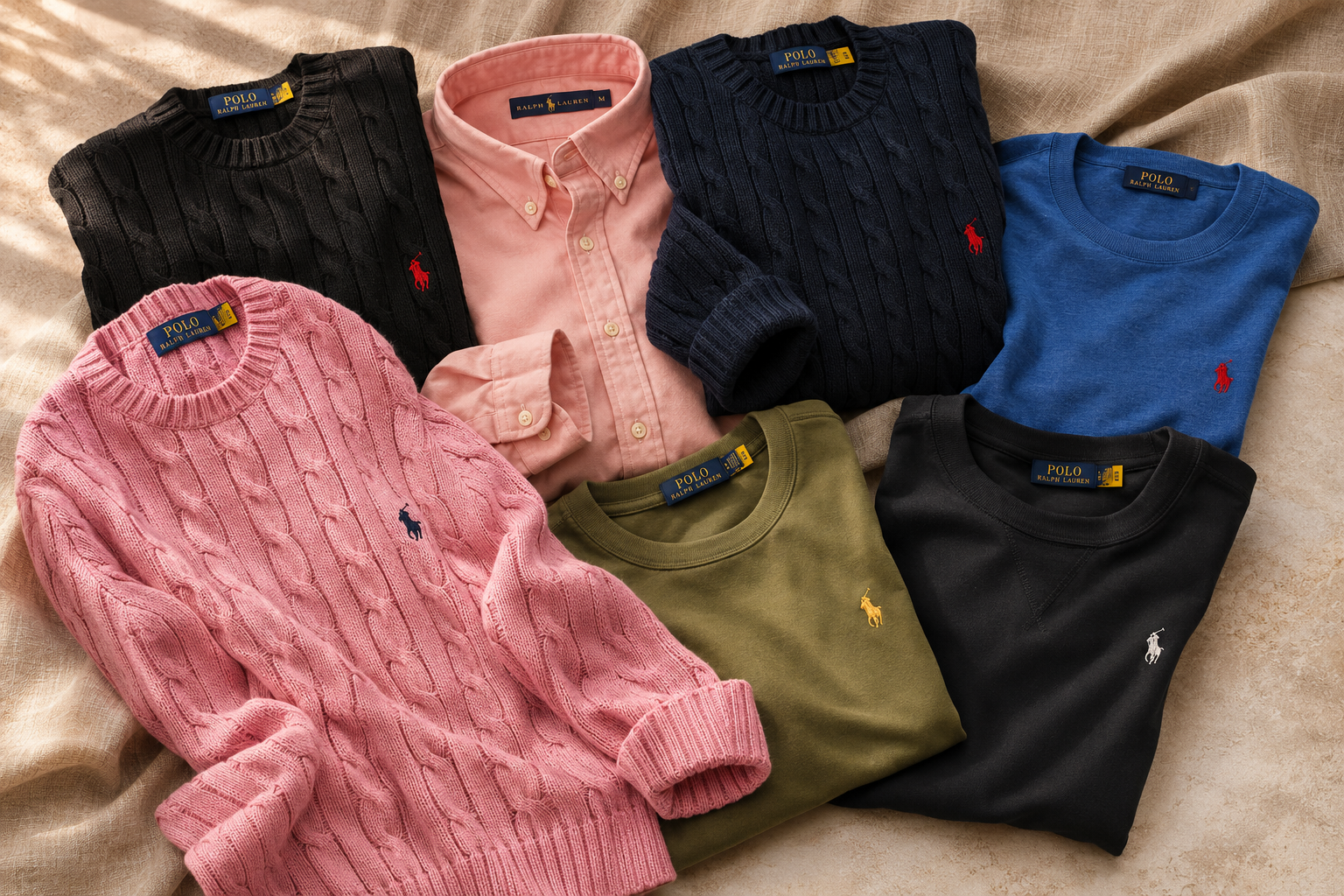
Overall Color Palette
This flat-lay features black, navy, pink, royal blue, and olive green as the main colors, combining low-saturation dark bases with visual highlights from pink and royal blue. The tops are arranged on a wooden table against a light fabric background, and the warm setting makes dark garments appear more grounded while making the pink pieces stand out.

Layering with Knitwear
The black, navy, and pink sweaters all show distinct cable textures, and the ribbed necklines and cuffs add dimension. Dark knits work well placed behind or above in a display, acting as visual anchors, while the pink sweater, with its larger area and forward placement, naturally becomes the focal point.
For a more restrained look, pair a black or navy sweater with a light pink button-up shirt, letting the collar and placket serve as subtle accents. For a softer overall feel, place the pink sweater next to a navy piece to create a warm-cool contrast while maintaining a tidy visual order.
Color Combinations for Basic Tops
The royal blue short-sleeve top creates a bright color block on the right side of the image, the olive green top sits below, and the black short-sleeve top provides a darker grounding color. These three colors can be arranged in the order of "bright, natural, dark" to avoid stacking similar hues.
For everyday styling, consider these ideas:
- Pair the royal blue top with a black sweater to make blue the sole high-saturation accent.
- The olive green top works well with a navy or pink sweater—navy for a more muted look, pink for greater color contrast.
- The black top can be layered with a light pink button-up shirt, using the light collar to break up an all-black outfit.
- When placed next to black or navy pieces, the pink sweater creates stronger contrast; paired with olive green, it leans toward a softer vintage tone.
How to Make Flat-Lay Displays Clearer
The image uses overlapping garments to show more colors and textures in limited space. The sweater necklines, cable patterns, and cuffs are prominent, while the button-up shirts' plackets and collars add different linear details. To make the display more readable, keep one main piece fully spread out and let other garments show only collars, cuffs, or parts of the body.
To recreate this layout, follow this order:
- Place the largest main-color item first to establish the composition's focal point.
- Position dark sweaters at the top or edges to create a stable frame.
- Put bright colors like pink and royal blue in the foreground or to the side, limiting the number of focal points.
- Keep buttons, collars, cuffs, and garment labels partially visible to add detail.
- Avoid arranging all garments perfectly parallel; slightly varying their angles makes the layout look more natural.
Key Details to Check Before Purchasing
This image helps assess color combinations, knit textures, neckline styles, and overall display relationships, but some garments overlap, and sleeve lengths, edges, and full silhouettes are not fully shown. To further determine if a single top meets your needs, you should review the complete front view, actual length and sleeve measurements, close-up details of collars and cuffs, and the material and care information listed on the product page. Any visible logos and hang tags are just part of the image and cannot be used alone to judge material, sizing, durability, or authenticity.