What This Photo Confirms This is a buyer-submitted photo shared in the community. The following review is based solely on the visible appearance and structural details in the photo, and does not represent that the author has personally purchased, worn, or tested this hoodie. The hoodie in the photo is light grey with a prominent dark red curv
What This Photo Confirms
This is a buyer-submitted photo shared in the community. The following review is based solely on the visible appearance and structural details in the photo, and does not represent that the author has personally purchased, worn, or tested this hoodie.

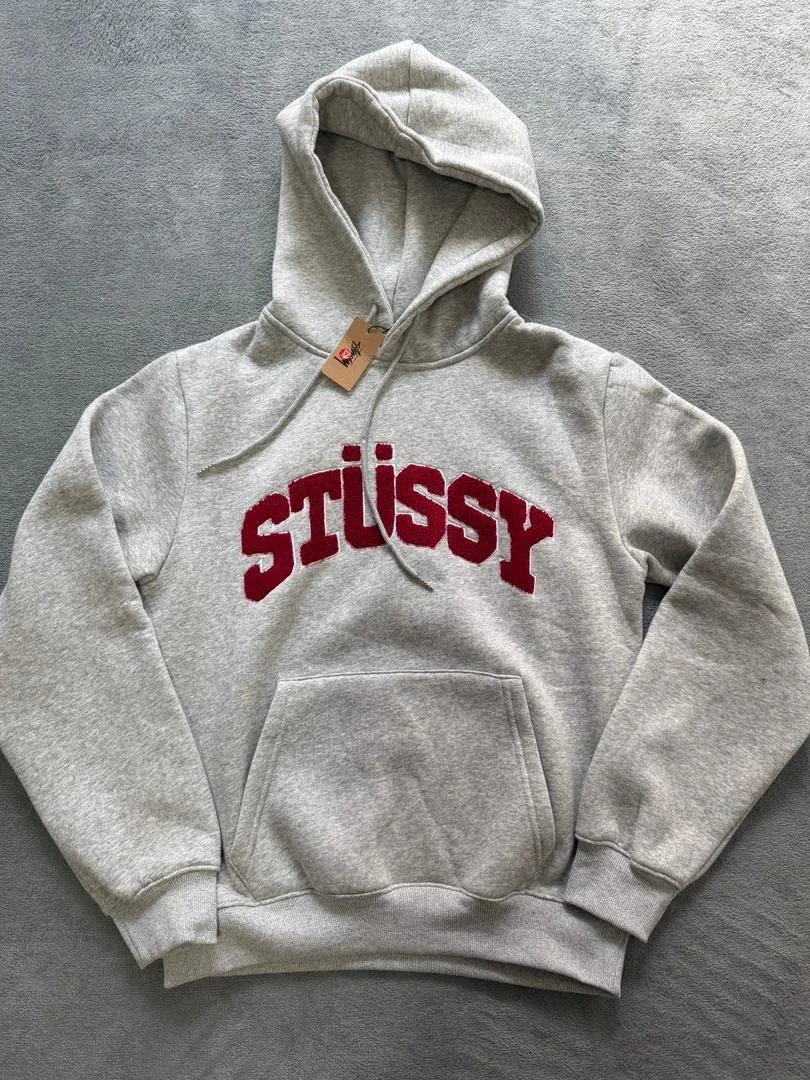
The hoodie in the photo is light grey with a prominent dark red curved letter print on the chest. Ribbed cuffs, hem, and hood are visible, and there is a kangaroo pocket on the front with drawstrings at the hood opening. The body and sleeves are laid flat and appear relaxed, giving an overall loose fit.
Fit and Design Details
The hoodie has a simple color scheme: the grey body contrasts sharply with the dark red letters, making the graphic highly recognizable. The chest print covers a large area and is the most prominent design element in the photo; from the current angle, the letter outlines and edges are fairly clear.
The hood structure is complete and has some dimensionality when laid flat. The seams between the shoulders and sleeves are clearly visible, and the cuffs are ribbed; the hem also has a wide ribbed band, giving the body a more structured silhouette. The kangaroo pocket is located at the lower front, and its opening and outline can be seen in the photo.
Workmanship Observations: Pros and Limitations
From this flat-lay photo, the directly observable advantages include:
- The main structures—body, sleeves, hood, and pocket—are intact.
- The contrast between the grey and dark red print is strong, making the overall look easy to identify.
- The shoulder seams, ribbed cuffs, and hem are relatively clear in the photo.
- The print is centered on the chest, with a clear visual focus.
However, a single flat-lay photo can only help judge the appearance; it cannot confirm fabric composition, thickness, inner construction, or actual feel. The photo also cannot indicate whether the shoulder width, body length, sleeve length, and looseness match a specific size when worn, nor can it be used to judge post-wash changes, long-term durability, or authenticity. The current image does not show the care label, inner lining, close-up details of the print, or more seam positions.
What to Check Before Buying
If you are evaluating whether this hoodie suits you, it is recommended to focus on the following information:
- The product's actual chest, body length, shoulder width, and sleeve length measurements.
- Fabric composition, weight or thickness description, and whether there is a fleece lining.
- Care label and inner photos to confirm care instructions and structural details.
- Close-up of the print to observe edges, surface texture, and how it is attached to the body.
- More photos of seam positions, especially the shoulder, cuffs, hem, and kangaroo pocket areas.
Overall, this photo is suitable for judging the hoodie's grey and dark red color combination, letter print placement, hood structure, and main ribbed details; conclusions about material, sizing, fit, and durability cannot be drawn from this flat-lay image alone.