If you're considering the gray JBL T450BT, the first things to confirm aren't the looks or claimed battery life, but two risks: whether the ear pads and clamping force fit your ears and head shape, and whether you can accept the single-ear static, hissing, or crackling issues reported in public buyer feedback. According to th
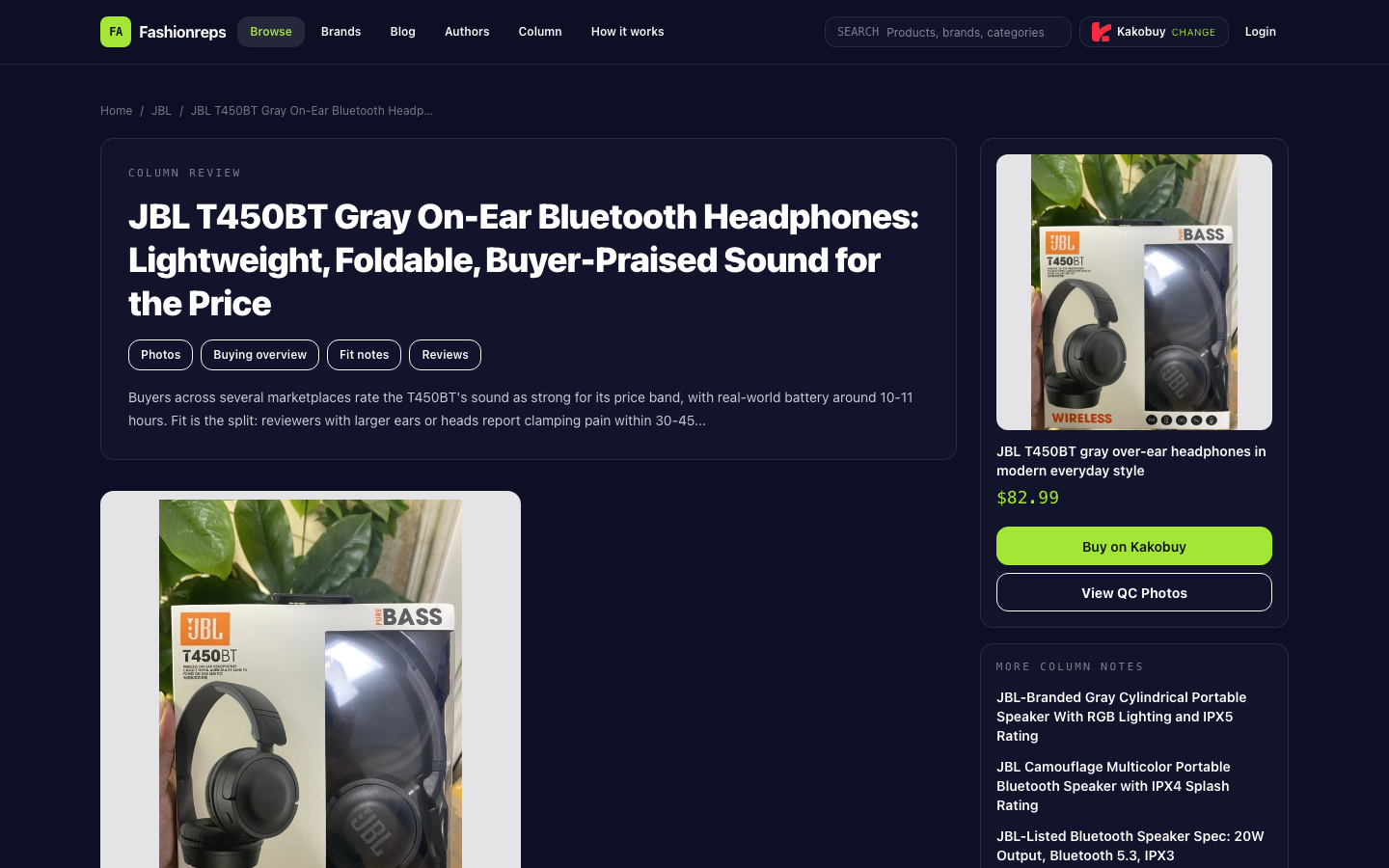

If you're considering the gray JBL T450BT, the first things to confirm aren't the looks or claimed battery life, but two risks: whether the ear pads and clamping force fit your ears and head shape, and whether you can accept the single-ear static, hissing, or crackling issues reported in public buyer feedback.
According to the product page, these headphones have a foldable design, and buyer feedback listed on the page suggests actual battery life is typically around 10–11 hours. The page also states that the T450BT uses on-ear pads, not full over-ear cups that completely surround the ears. Therefore, users with large ears should prioritize fit when making a purchase decision.
What Large-Eared Users Need to Check First
On-ear pads press directly against the outer ear. Public feedback shows that users with larger ears or wider heads may find the ear cups small and the clamping force tight, with some experiencing pain after about 30–45 minutes and removing the headphones. Others report wearing them for two to three hours straight, indicating that comfort depends on head shape, ear size, and personal tolerance, and cannot be judged solely by the product name or images.
Before buying, go through this self-check in order:
- Measure or estimate whether your ears are likely to extend beyond the coverage of on-ear pads.
- Recall if you are easily sensitive to lateral pressure from headphones.
- If you need to wear them continuously for more than an hour, make "acceptable clamping force" a must-confirm condition.
- Prioritize purchase channels with clear return and exchange policies, and don't treat third-party buyer comfort descriptions as a guarantee for your personal wearing experience.
If you have large ears, a wide head, or have often given up on on-ear headphones due to ear pinching, then these headphones should be considered a high-risk fit choice, not a default comfortable sports headphone.
How to Understand the Single-Ear Noise Risk
In the public buyer feedback summarized on the product page, reports of persistent static, hissing, or crackling in one ear cup appear repeatedly, with some focused on the right side near the Bluetooth module. The page also mentions that some buyers returned or exchanged the product because of this.
This content comes from third-party buyer feedback and does not mean every unit will malfunction, nor does it prove the failure rate of a specific batch. A safer approach is to treat it as a risk to manage before purchase: confirm the return/exchange window, confirm whether abnormal sounds are eligible for return, and test the left and right channels separately soon after receiving the product.
After receiving the product, use this simple check process:
- In a quiet environment, play music at low volume and listen to each ear separately.
- After pausing the music, check if there is persistent hissing, crackling, or one-sided background noise.
- Test again after connecting and disconnecting Bluetooth to see if the noise only appears in certain states.
- Listen continuously for a while to confirm the noise is not an occasional transient connection sound.
- Within the return window, save recordings or videos of the abnormal phenomenon and submit them according to the purchase channel's requirements.
Since the current evidence comes from buyer feedback compiled on the product page, not unified laboratory testing, a definite failure probability cannot be given.
Can Battery and Build Info Offset the Fit Risk?
Public feedback listed on the page suggests actual battery life is around 10–11 hours, which is usually sufficient for a workday or moderate use. However, some long-term users say that after six months to a year, playback time may drop to about 4 hours, so claimed or short-term battery life does not represent long-term battery performance.
The headphones' advantages include light weight and foldability, and some buyers think they don't slip easily during running, working out, or playing basketball. However, the page also compiles feedback on plastic construction, loose folding hinges, and ear pad peeling or tearing as long-term durability issues. They lack a 3.5mm wired mode, use a Micro-USB port, and cannot be used while charging.
Therefore, battery life and foldability only indicate appeal for portability and short-term use, and cannot replace checking clamping force and single-ear noise risk.
Pre-Purchase Judgment
| Your Situation | More Reasonable Judgment |
|---|---|
| Small to medium ears, can accept on-ear pads, mainly need lightweight and foldable | Continue to check return conditions and test soon after receiving |
| Large ears, wide head, or prone to ear pinching | Prioritize looser ear cup designs and purchase cautiously |
| Cannot accept any single-ear background noise or occasional static risk | Hold off on purchase, first confirm if return/exchange protection is sufficient |
| Need a 3.5mm wired connection, or need to use while charging | Not suitable to target the T450BT |
Conclusion
The gray JBL T450BT should not be simply categorized as a headphone that "large ears can wear with peace of mind." Public information shows that its on-ear pads and tight clamping may cause pain for users with large ears or wide heads in a relatively short time; at the same time, buyer feedback on the page also hints at single-ear static, hissing, or crackling risks.
If your ears are small to medium and you value lightweight, foldable design, and the actual battery life of about 10–11 hours, you can continue to verify after confirming the return conditions. If you have large ears, a wide head, or are very sensitive to noise, a safer decision is to prioritize looser ear cup designs, or at least confirm before purchase whether abnormal sounds and wearing discomfort can be returned or exchanged.