The photos were taken and provided by the customer who purchased the items. The comments below are limited to details visible in these images. Photo 1 shows the color balance of the group: black outerwear and hoodies carry most of the visual weight, while the gray hoodie and white knit add brightness. The brown pl
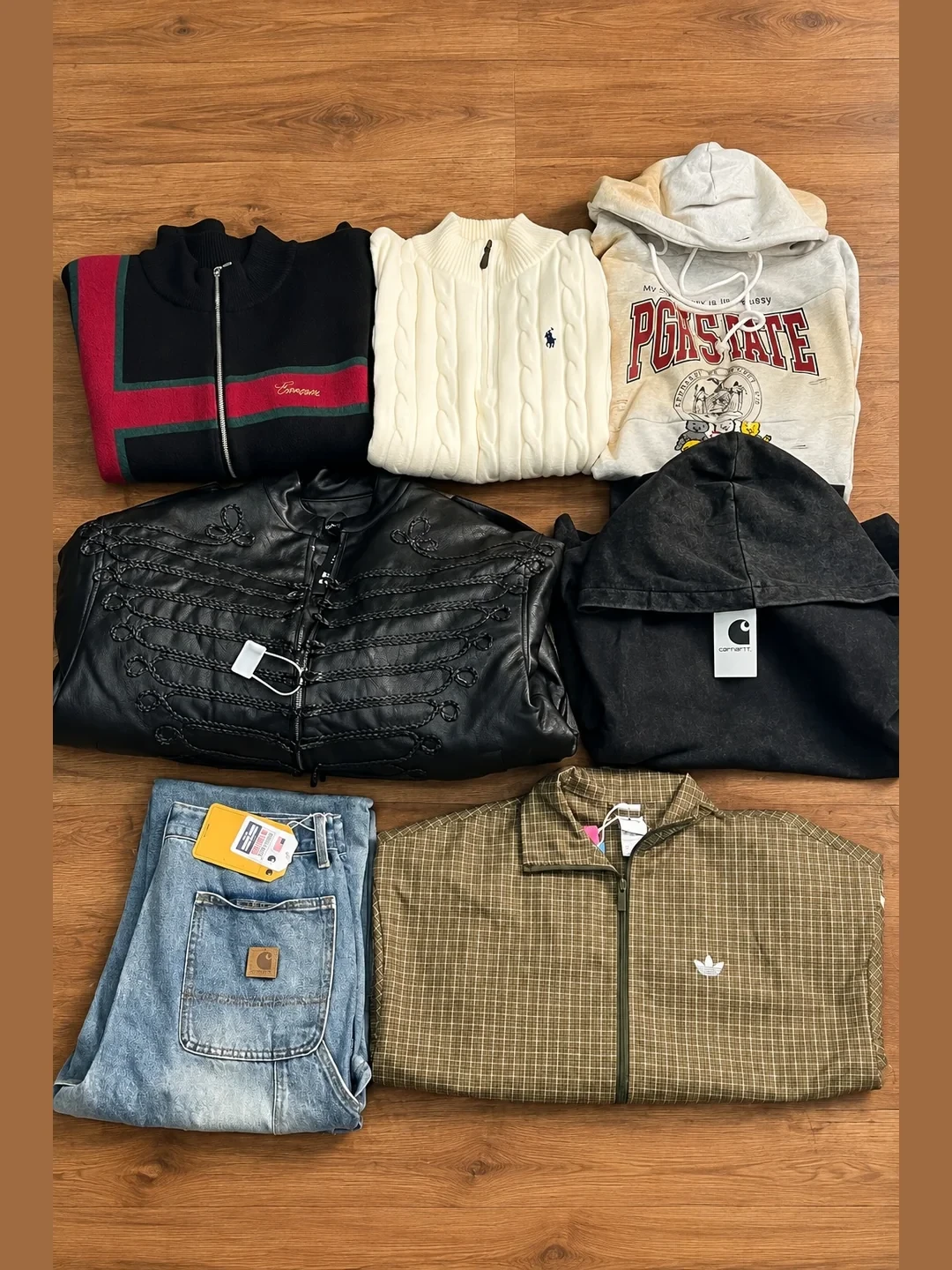
The photos were taken and provided by the customer who purchased the items. The comments below are limited to details visible in these images.

Photo 1 shows the color balance of the group: black outerwear and hoodies carry most of the visual weight, while the gray hoodie and white knit add brightness. The brown plaid jacket and light-blue jeans bring a more vintage color direction. The set also combines several design languages, including sporty marks, collegiate-style graphics, plaid, and highly decorative jacket detailing. This makes it useful to think in terms of a neutral base with one statement layer. However, a flat lay cannot show the actual proportions, length, or relaxed fit on a person.
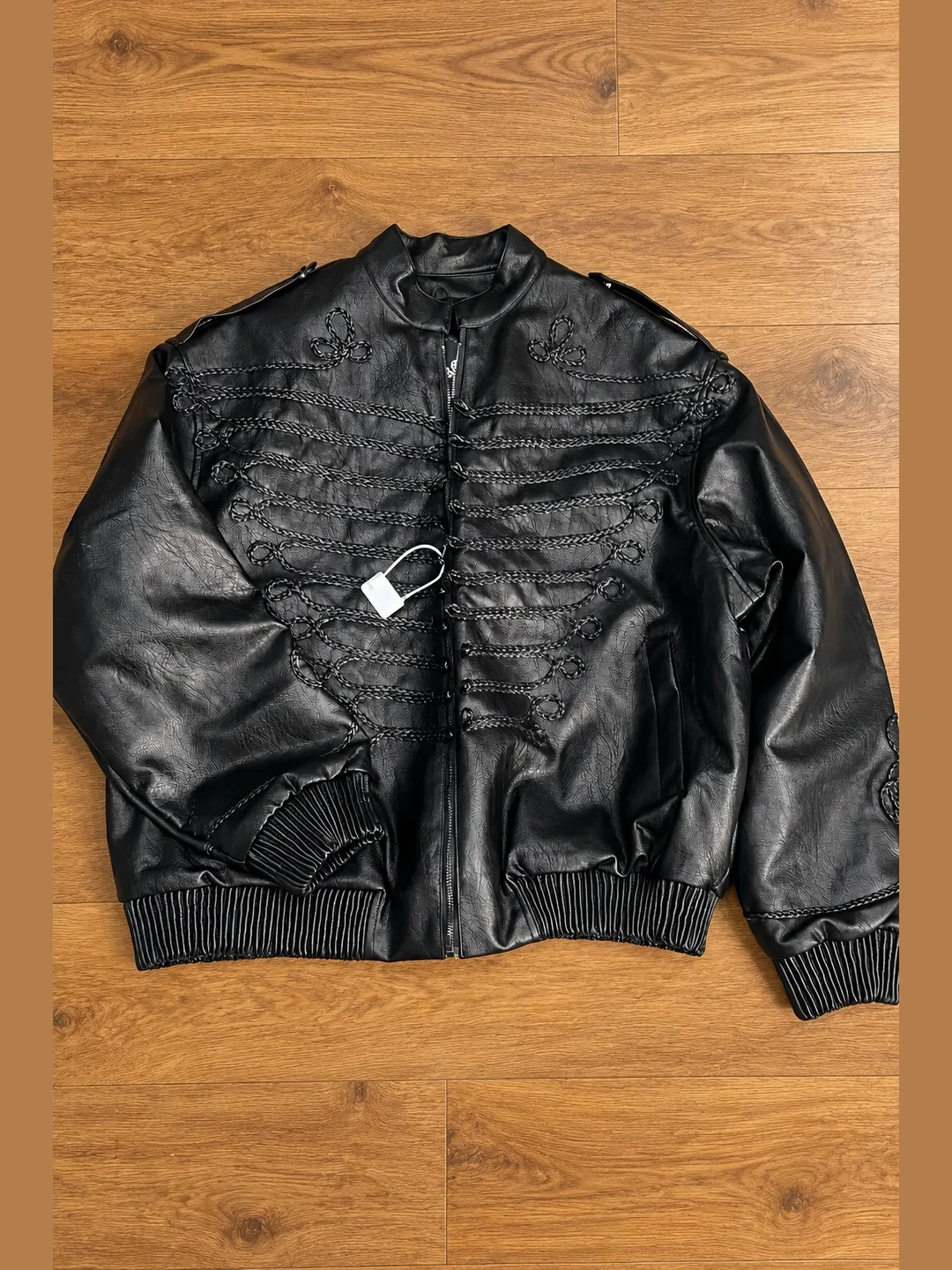
The black jacket is defined by multiple braided-looking rows across the chest and shoulders, looped hardware, and a stand collar. The cuffs and hem have visible ribbed sections, and the front closes with a full-length zipper. Because the details are tonal, the jacket's structure comes mainly from texture and line placement. It could work with a simple light-colored layer or relaxed jeans. The photo clearly shows the front decoration and cuffs, but not the back, inside, side range of motion, or the full silhouette when zipped. Those are the angles and measurements to check before choosing a size.
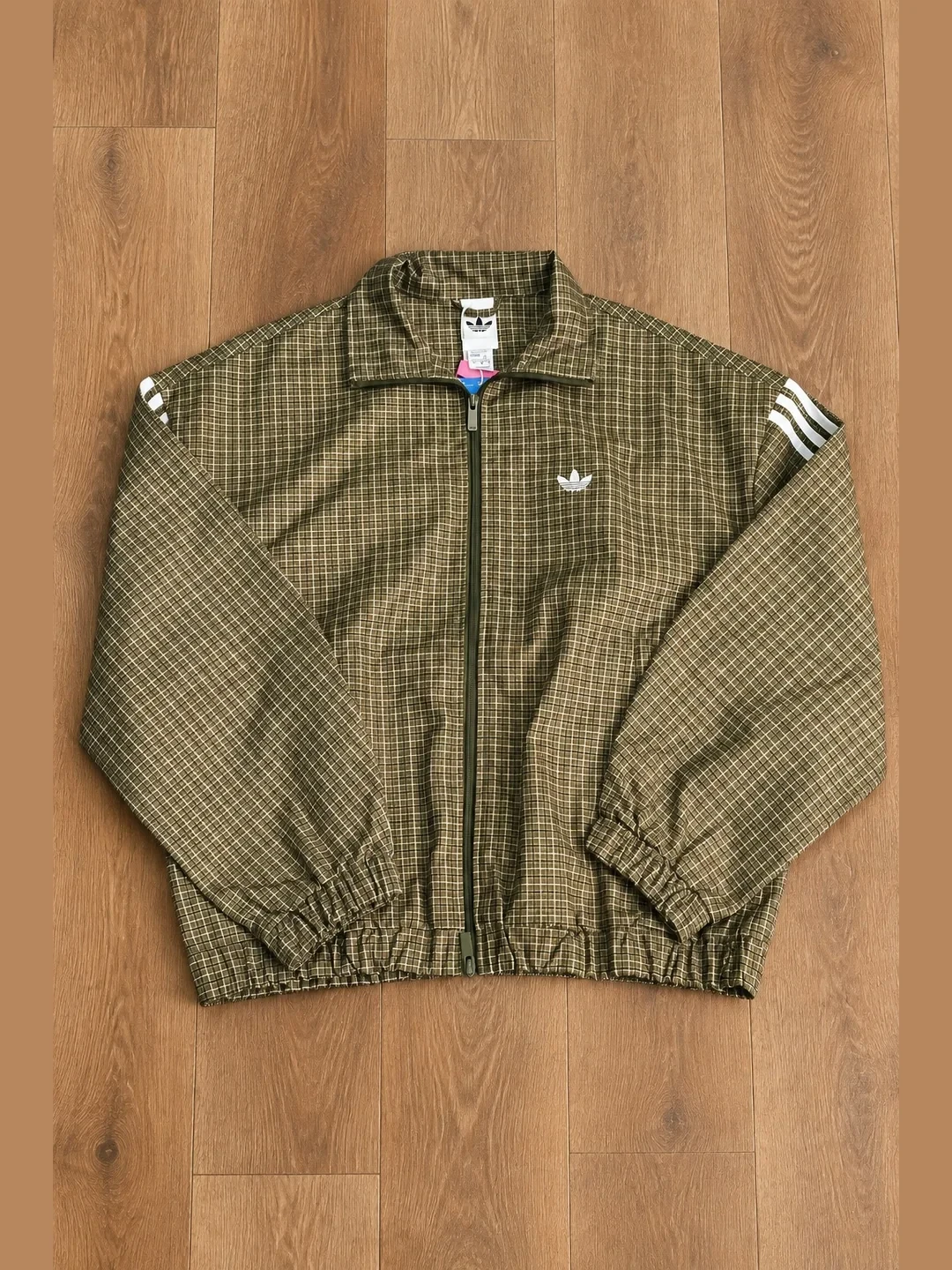
This brown jacket has a fine plaid pattern, a stand collar, and a center zipper. The sleeves use a different plaid direction, while three white stripes are visible at the shoulder and a white trefoil-shaped mark appears on the chest. Elasticated-looking finishes are visible at the cuffs and hem. Compared with a solid athletic jacket, the pattern gives it more visual texture. It can create a brown-and-blue contrast with the light jeans in Photo 5 or sit over a black base layer. The image does not show the back, inside construction, or how the shoulder line sits when worn, so the cut cannot be judged for a particular body shape from this view alone.
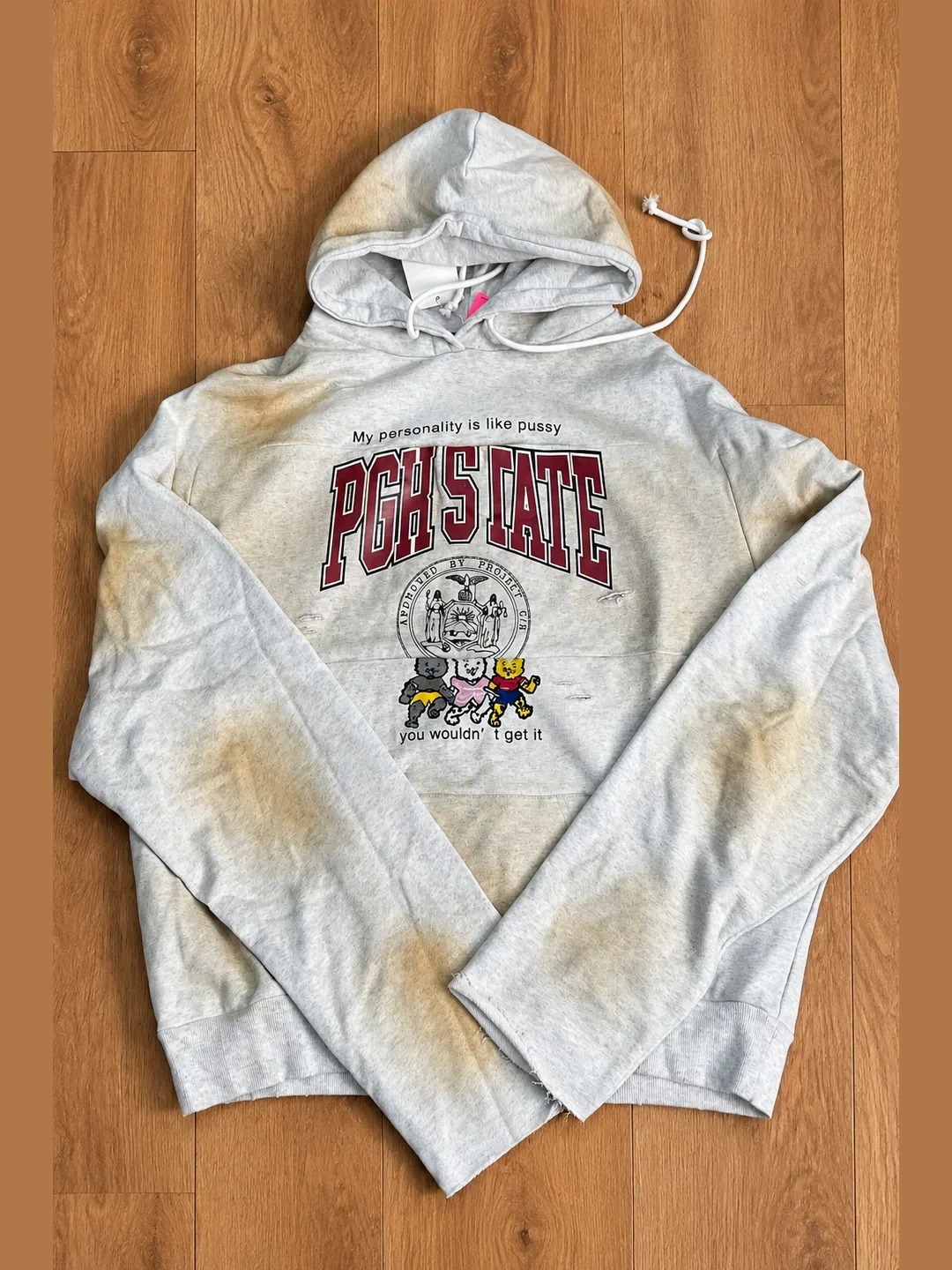
The gray hoodie has a large front graphic with red lettering, an illustration, and additional text above and below it. White drawstrings are visible at the hood. The image also shows uneven darker and lighter areas across the body and sleeves, creating a distressed-looking effect, along with ribbed cuffs and hem. The graphic is the main focal point, so it can contrast strongly with the light-blue jeans in Photo 5. Layered under black outerwear, it would keep the front graphic as the visual center. The image supports comments on the graphic layout and visible finish only; it cannot establish print durability, fiber content, or warmth.
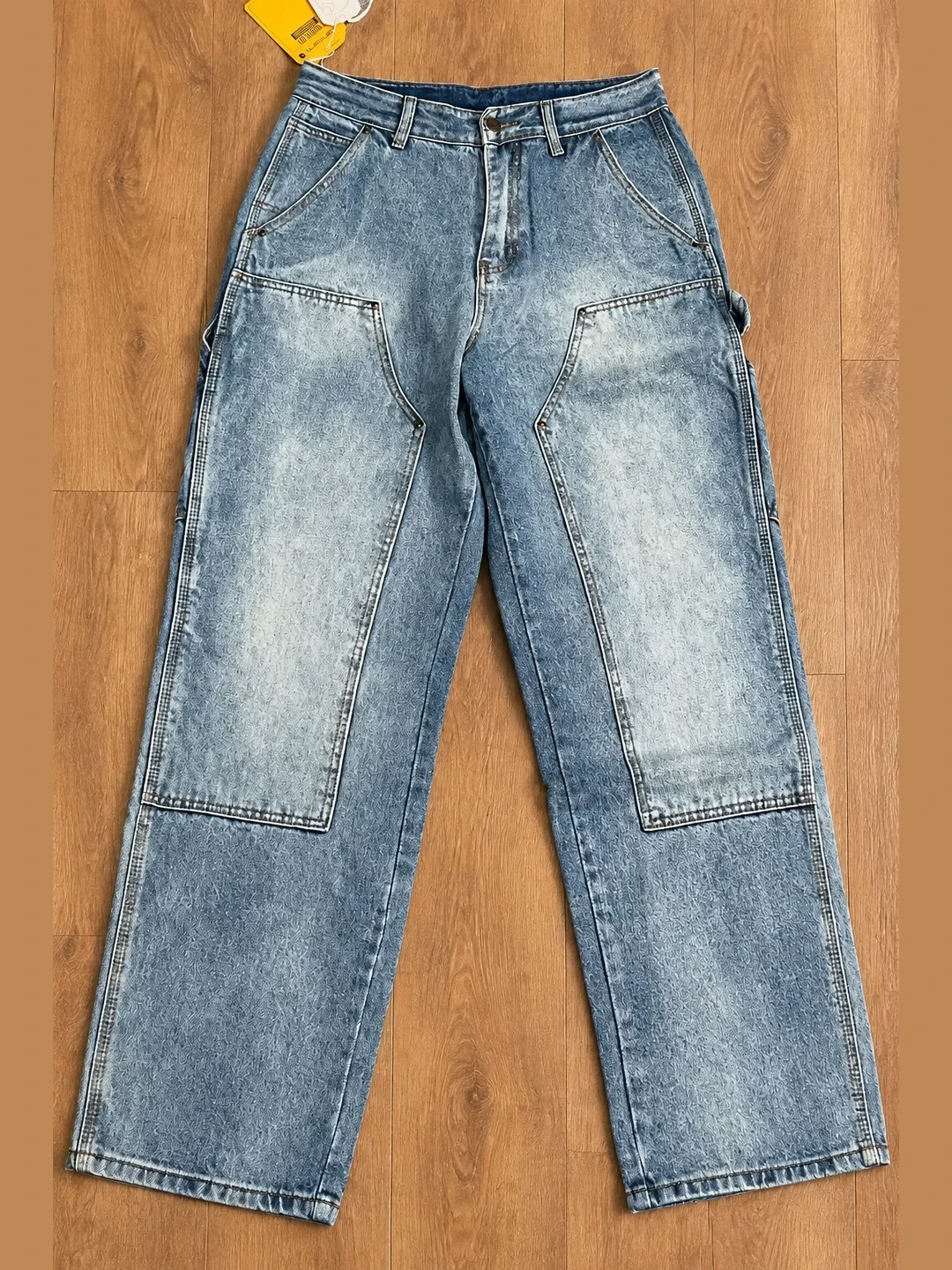
The light-blue jeans have a visibly broad straight-leg direction, large panel-style front pockets, and strongly contrasting light stitching around the pockets and seams. Lighter washed areas appear across the thighs and knees. The waistband includes belt loops and a metal button, and a yellow tag remains attached near the top. These jeans can brighten black, brown, or gray layers, especially when paired with the black decorative jacket in Photo 2. The photo shows the front pockets and hems but not the waist measurement, rise, back pockets, full length, or rear silhouette. Those measurements and the back view matter before deciding whether the cut will work for a specific outfit.
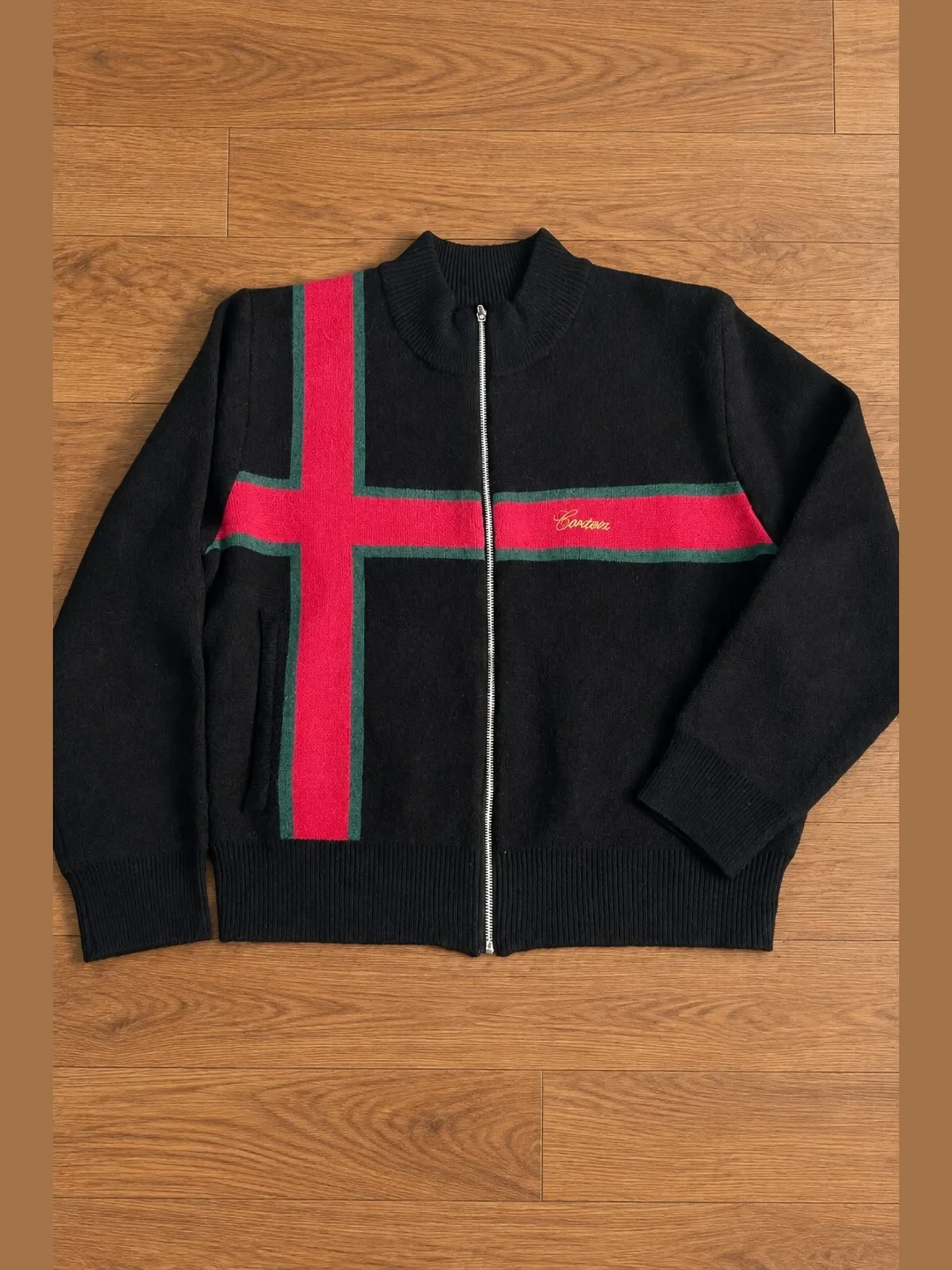
The black knit jacket uses a bold red horizontal and vertical color block edged in dark green, creating a cross-like front composition. A small embroidered-looking word appears on the chest, while the collar, cuffs, and hem use ribbed finishes. The silver zipper is also visible. Among the pieces in the group, this jacket relies most on red-and-green contrast to create its focal point, so quieter trousers and base layers would leave the color blocking clear. The image shows the front and some finishing details, but not the back, inner labels, or worn length, so its exact looseness and proportions remain outside what the photo can establish.
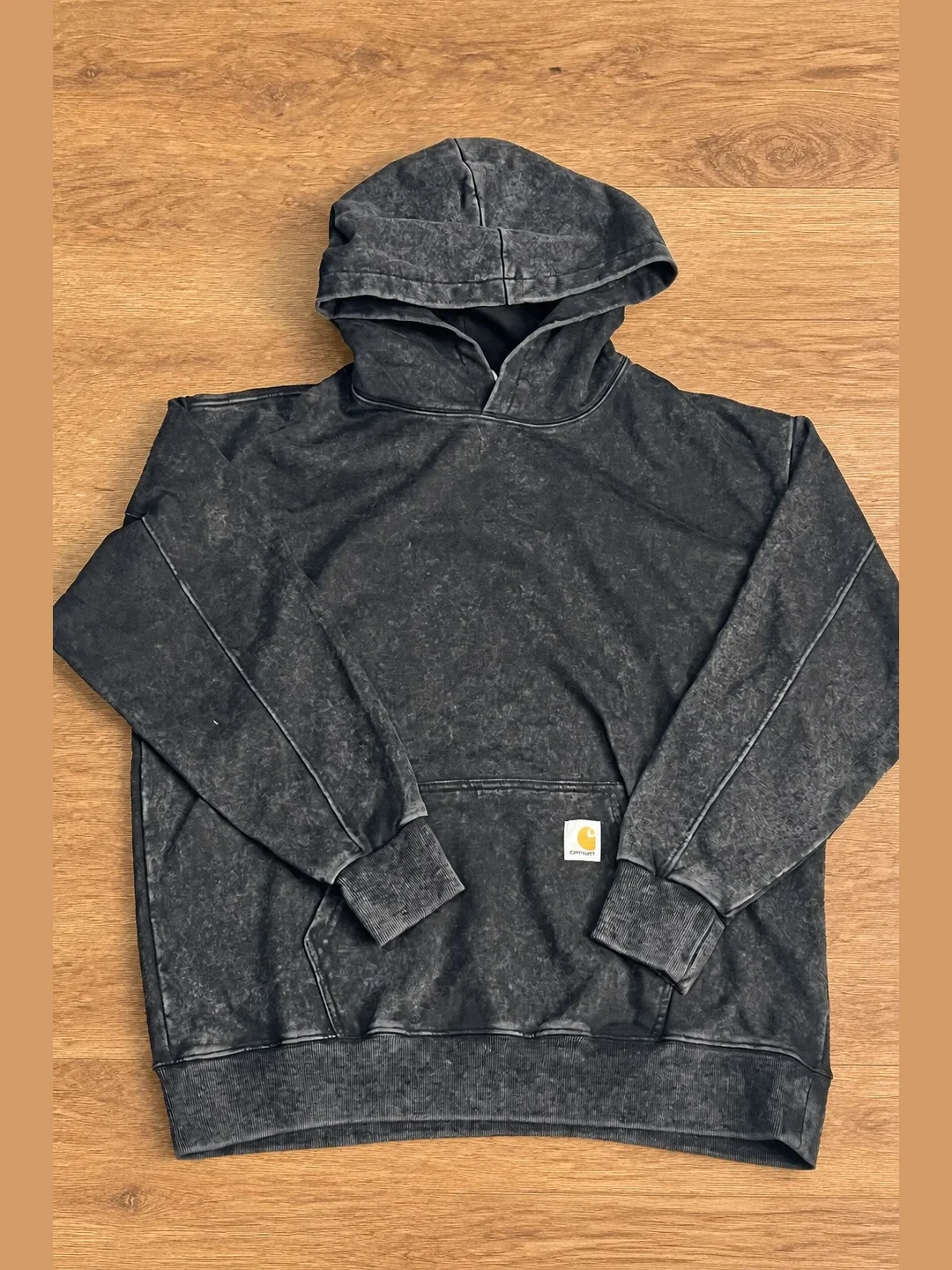
The black pullover has a low-contrast textured appearance, a front kangaroo pocket, and broad ribbed cuffs and hem. A Carhartt label, as shown in the image, is visible near the waist. Its relatively restrained front makes it suitable as a basic layer beneath the graphic hoodie, plaid jacket, or color-blocked jacket. It can also create a simple dark-and-light combination with the light-blue jeans. The photo shows the front construction and hood shape, but not the back graphic, inside, sleeve length, or worn fit, so those points cannot be inferred from this set.
Taken together, the photos show several distinct styling directions rather than one uniform look. The black decorative jacket and red-and-green color-blocked jacket provide statement structure; the plaid jacket adds pattern; the gray graphic hoodie supplies a prominent front message; and the light-blue utility-pocket jeans provide a brighter, more structured base. When comparing similar pieces, the most useful checks are whether the front graphic is centered, whether panels and pockets look even, whether the cuffs are clearly finished, and whether the back, side views, and measured dimensions fit the intended styling plan.