The photos were taken and provided by a customer who purchased the items. This review is limited to visible appearance and construction. The set is a collection of several autumn/winter outerwear pieces rather than a continuous detail sequence of one item, so first separate each garment by its color, visible marking, and structure before judging whether the photos cover the detail that matters to you. 
The photos were taken and provided by a customer who purchased the items. This review is limited to visible appearance and construction. The set is a collection of several autumn/winter outerwear pieces rather than a continuous detail sequence of one item, so first separate each garment by its color, visible marking, and structure before judging whether the photos cover the detail that matters to you.
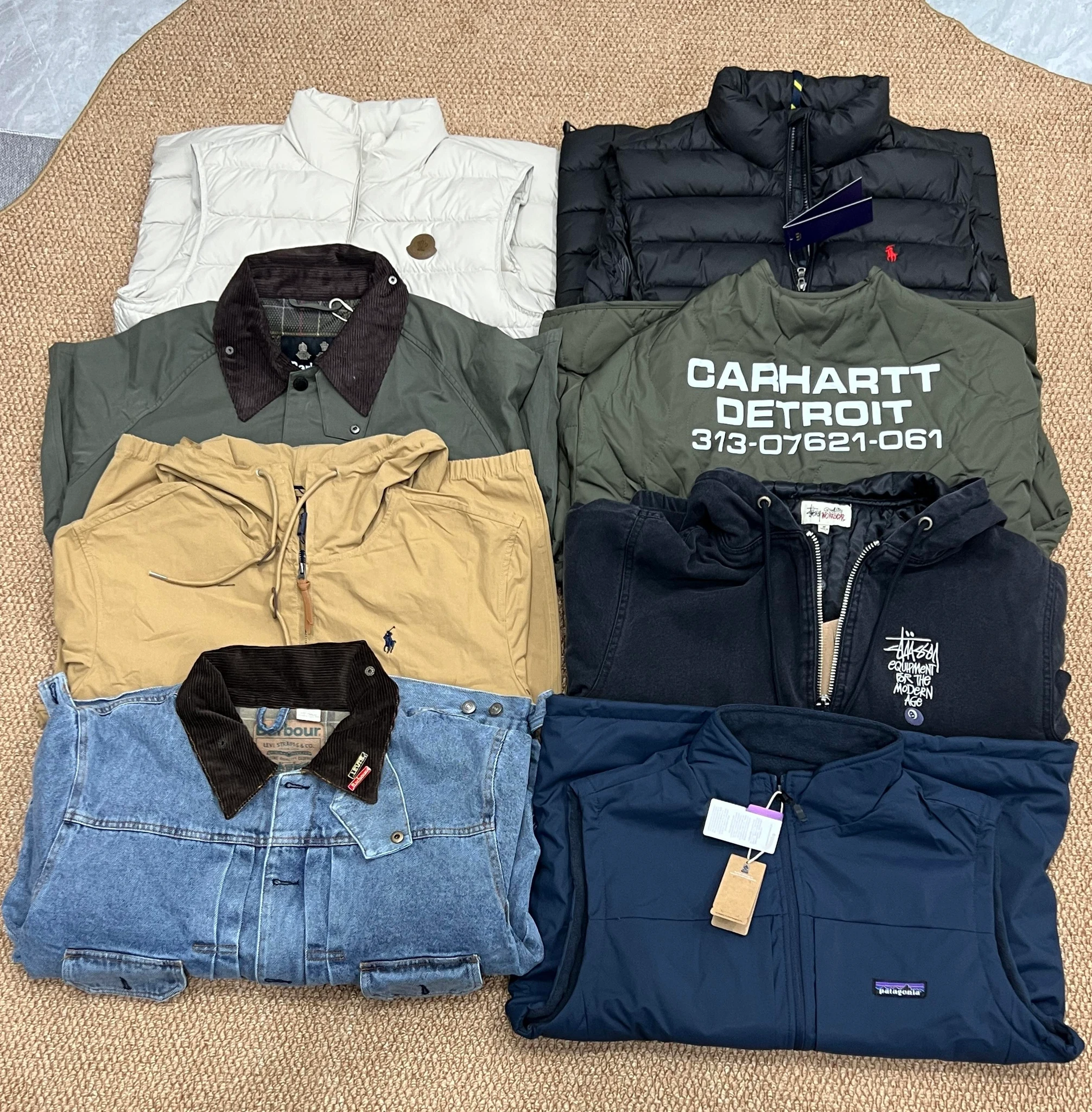
Photo 1 presents the group as a whole: a white padded vest, a black padded jacket, dark green outerwear, a black hooded jacket, a light-blue denim jacket, and a navy outer layer can be seen in different overlapping positions. Some markings are already readable, but the overlap hides parts of the collars, linings, and hems. This image is useful for comparing the group's colors and overall layering, but not for judging every garment's complete construction.
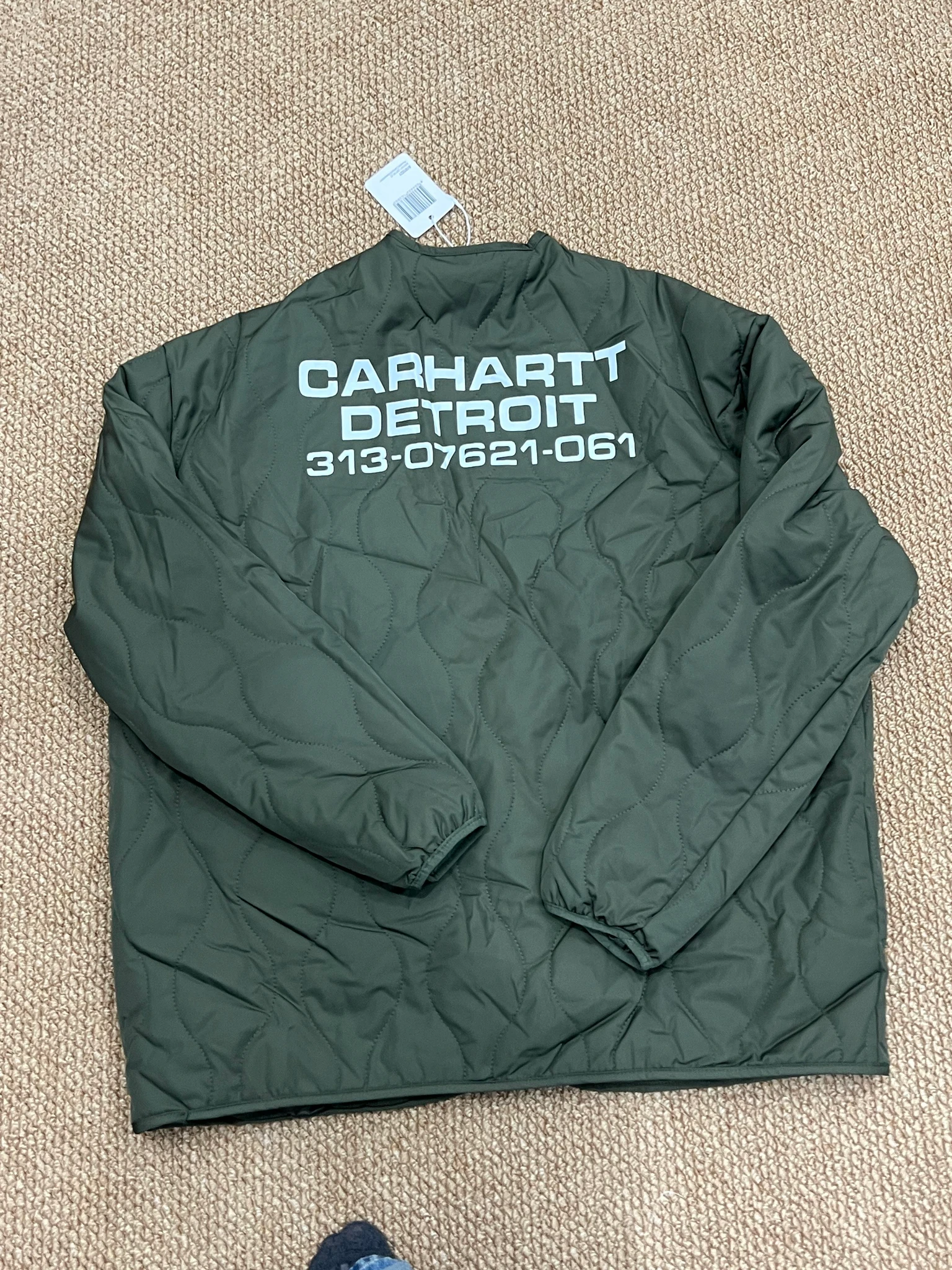
Photo 2 shows one dark green quilted jacket laid flat. The large "CARHARTT DETROIT 313-07621-061" lettering is visible across the back, with continuous quilting across the body and sleeves and elasticated-looking cuffs. This angle makes the scale and placement of the back graphic easy to see; it does not show the lining, side profile, or worn shape.
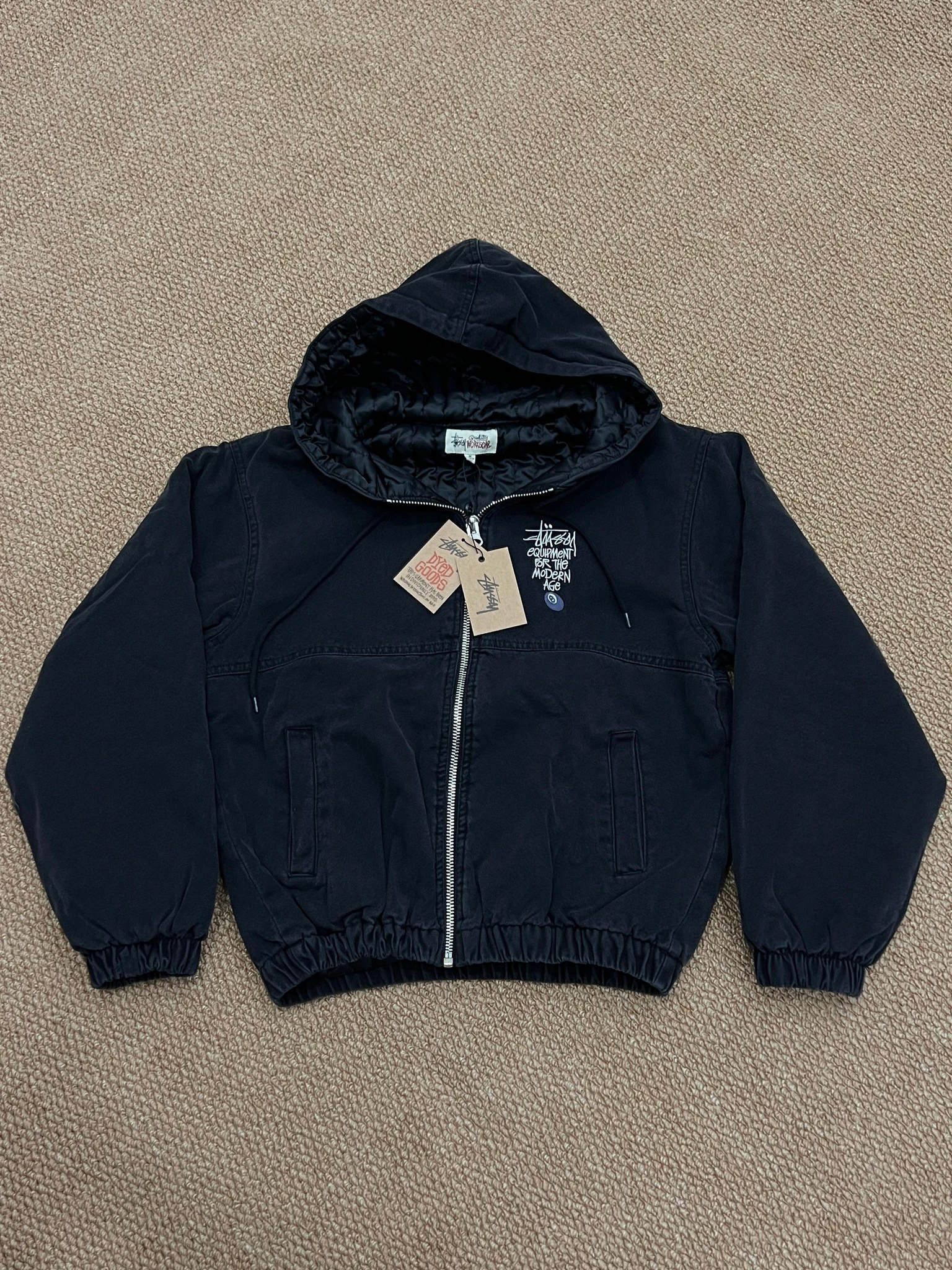
Photo 3 shows a black zip-front hooded jacket with a hood, silver-colored zipper, two side pockets, an elasticated-looking hem, and elasticated-looking cuffs. A Stüssy marking and paper tags are visible on the chest, while a quilted-looking lining can be seen inside the hood. The front is documented clearly, but a flat lay cannot establish shoulder width, garment length, range of movement, or the feel of the zipper.
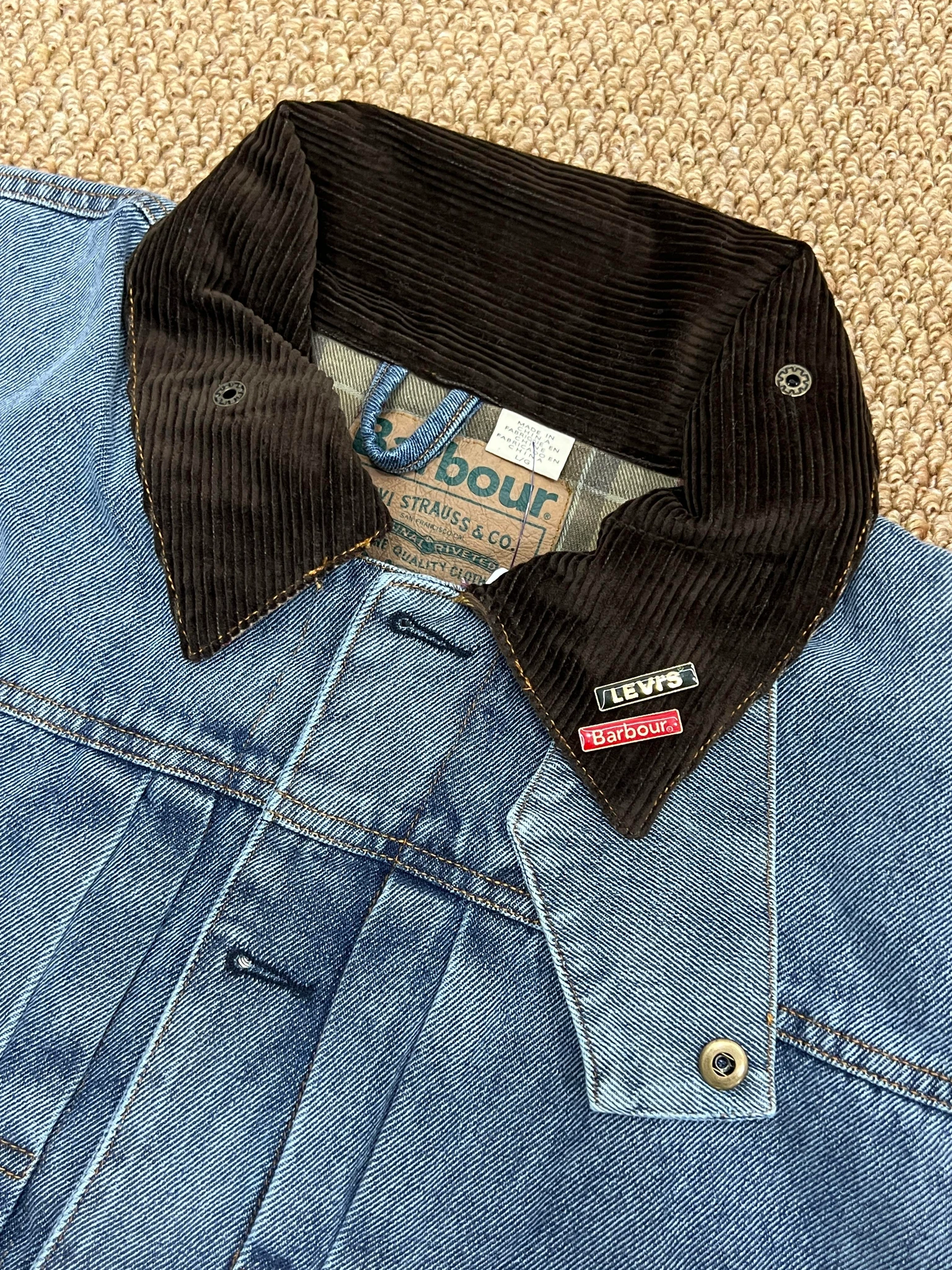
Photo 4 is a close-up of the light-blue denim jacket. It shows the brown corduroy collar, inner label area, metal snap, front seam details, and pocket flap. Levi's and Barbour markings are visible near the collar. This close view helps with the placement of markings, collar texture, and nearby stitching, but it covers only part of the upper garment and cannot confirm authenticity or a specific collaboration.
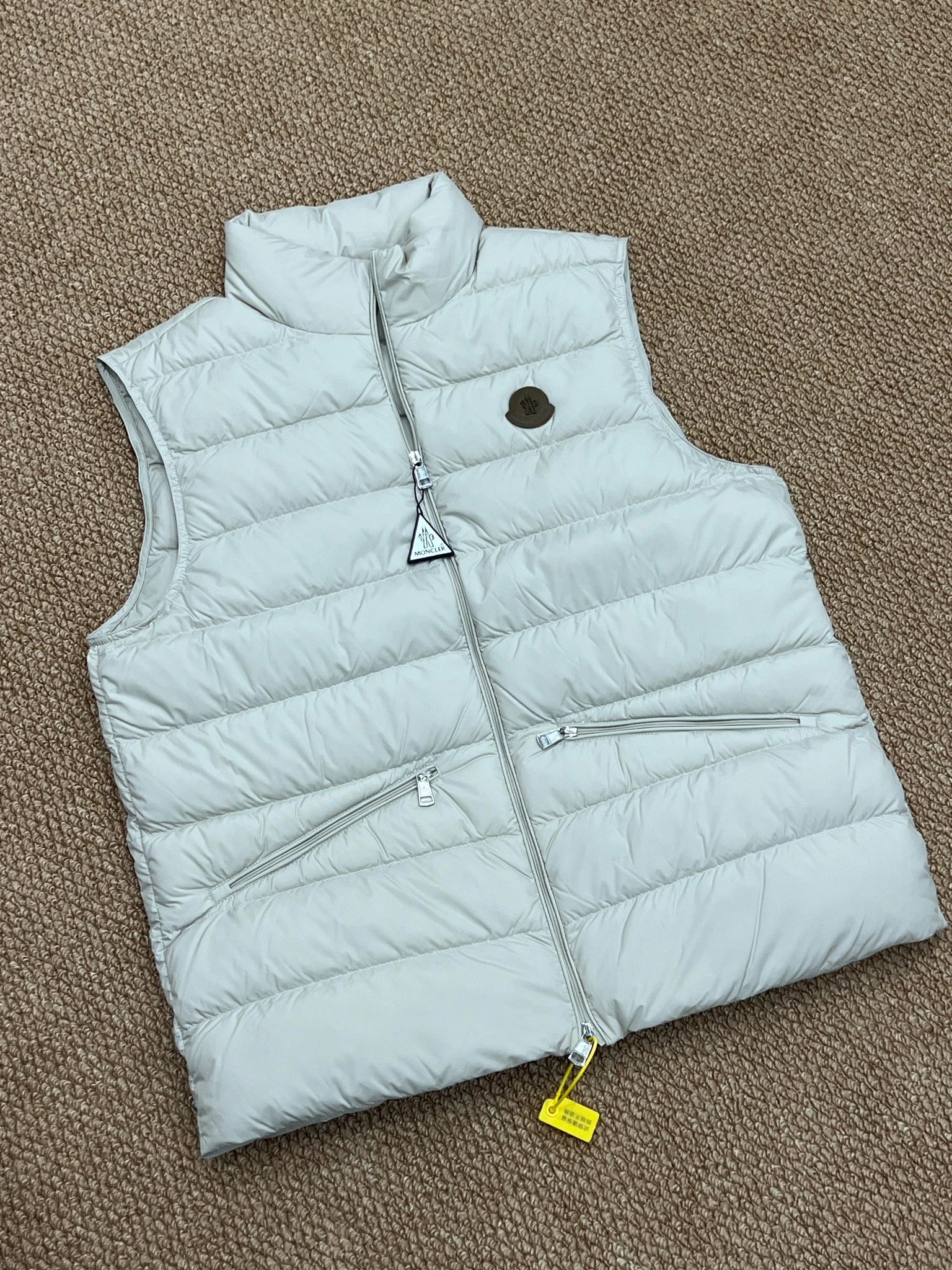
Photo 5 shows a white sleeveless padded vest with a stand collar, full-length zipper, two angled zip pockets, horizontal sections, a round chest marking, and a hanging tag. The section layout and pocket placement are easy to inspect, making this image useful for judging the visible silhouette and storage design. It does not provide complete readable sizing information, a full view of the lining, or evidence of actual warmth.
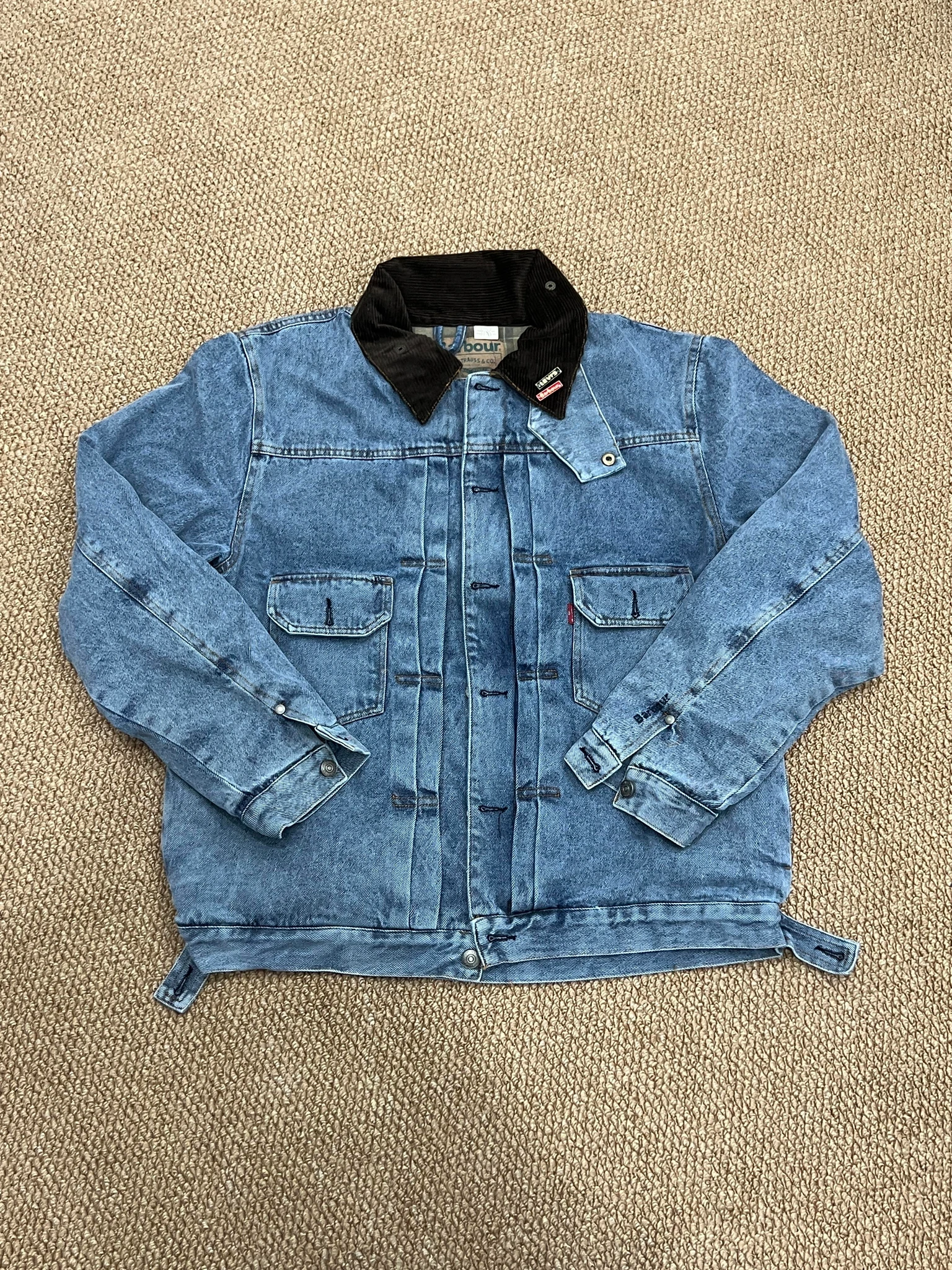
Photo 6 provides a complete front view of the light-blue denim jacket. The brown collar, central snap closure, two flap chest pockets, lower side pockets, snap cuffs, and side waist adjustment tabs are visible. The denim's tonal variation and panel seams are also clear in the flat lay. For shopping decisions, this is the most useful view for checking pocket count, closure type, and hem construction; it cannot replace measurements or an on-body fit view.
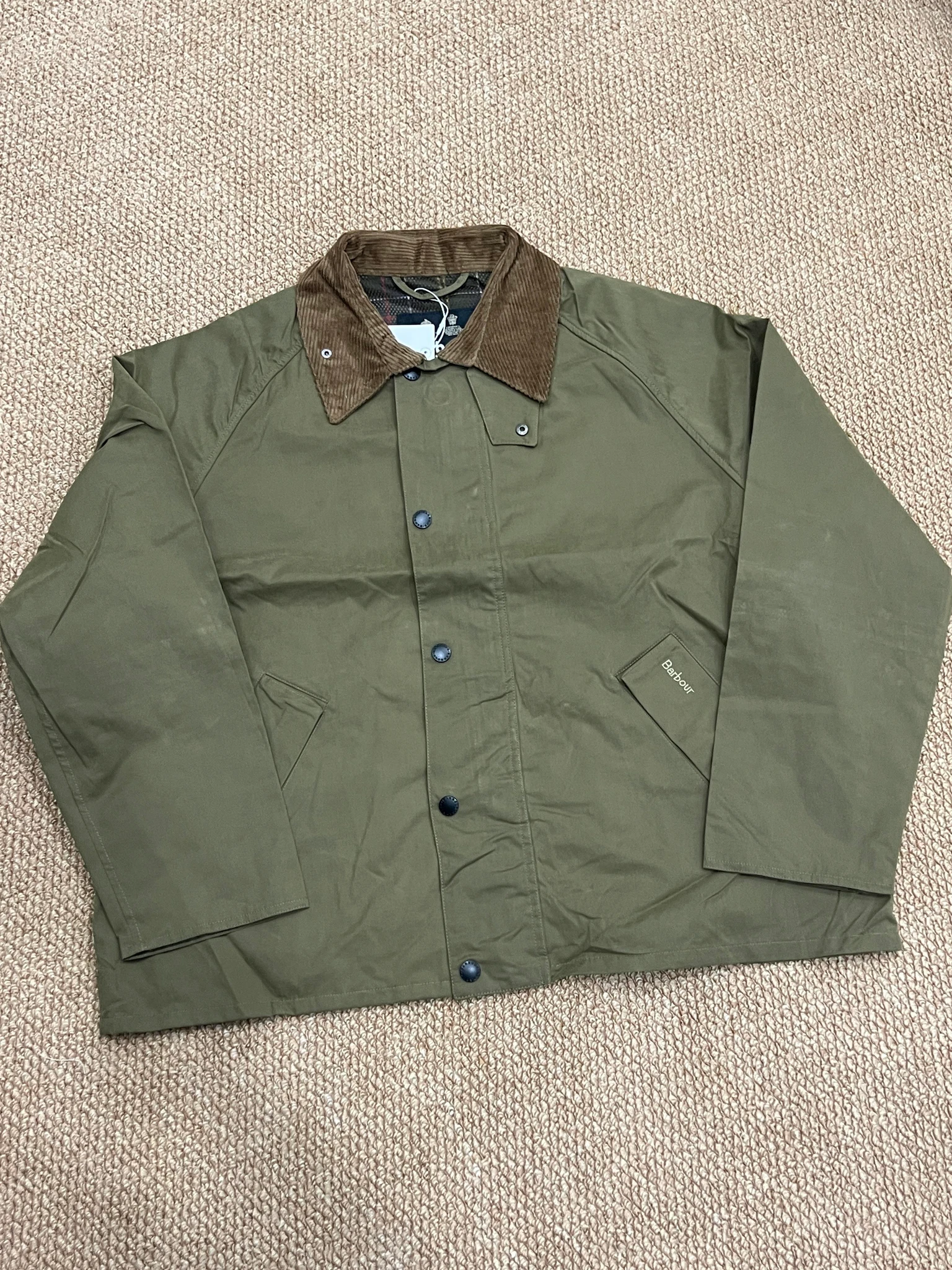
Photo 7 shows an olive jacket with a brown corduroy collar, central snap placket, two angled pockets, and a relatively straight, roomy-looking outline. A Barbour marking is visible near one pocket. It helps distinguish this jacket from the denim jacket in Photo 4 by collar, color, and pocket layout, but it does not show the back, lining, or worn length proportions.
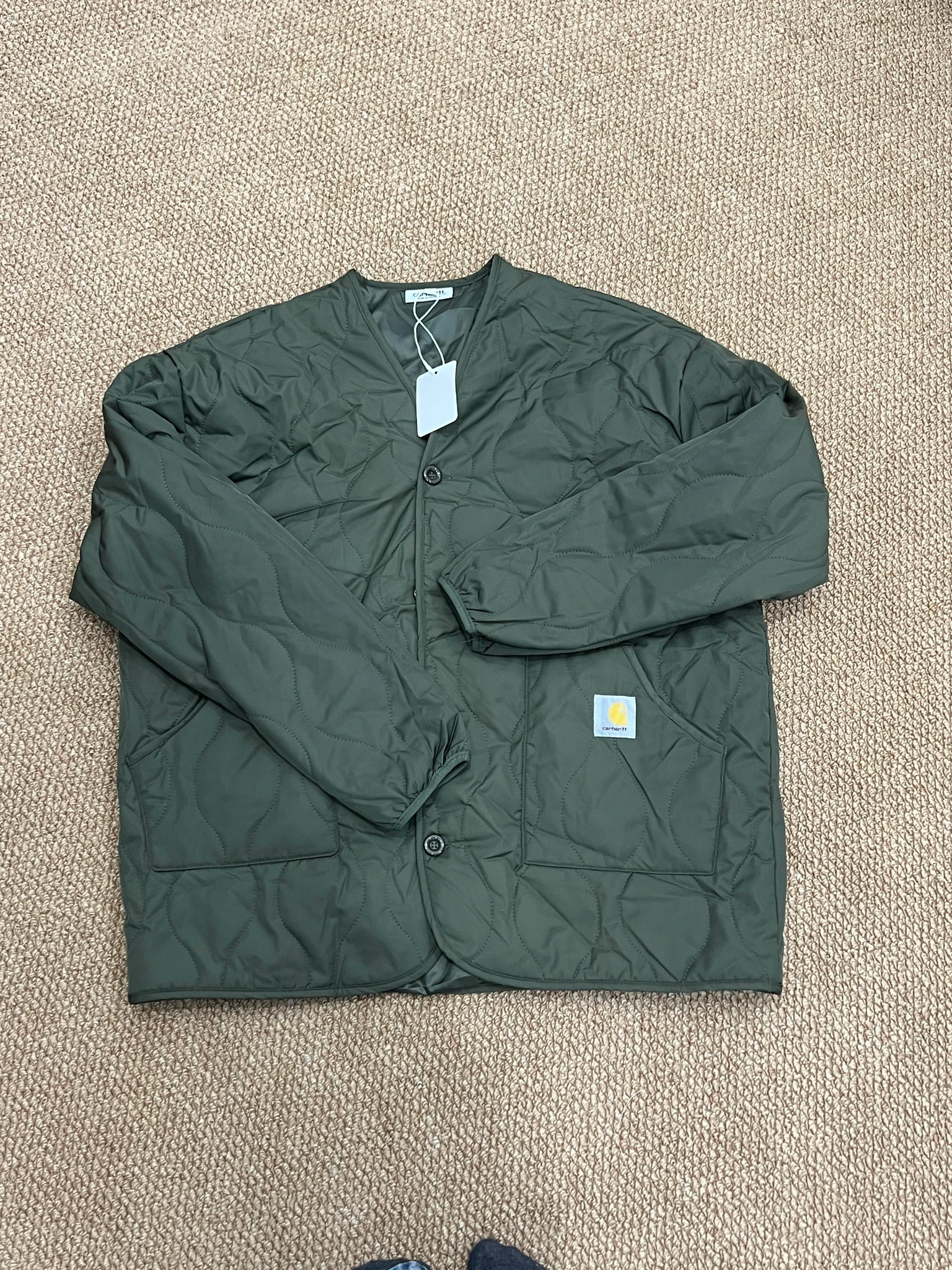
Photo 8 shows a dark green quilted cardigan-style jacket with a V-shaped neckline, central buttons, two large patch pockets, elasticated-looking long cuffs, and a Carhartt marking on the chest. The quilting is visible across both the body and sleeves, and the front structure differs from the jacket in Photo 2 because it uses a cardigan-style opening. This angle confirms the front, pocket, and neckline design, but not button strength, lining construction, size suitability, or warmth when worn.
When comparing these pieces, start with what the photos show clearly: marking placement, collar shape, pocket count, closure type, cuffs, and quilting layout. The images do not provide reliable measurements for judging fit. They also cannot establish fiber content, warmth, durability, authenticity, or a specific model.